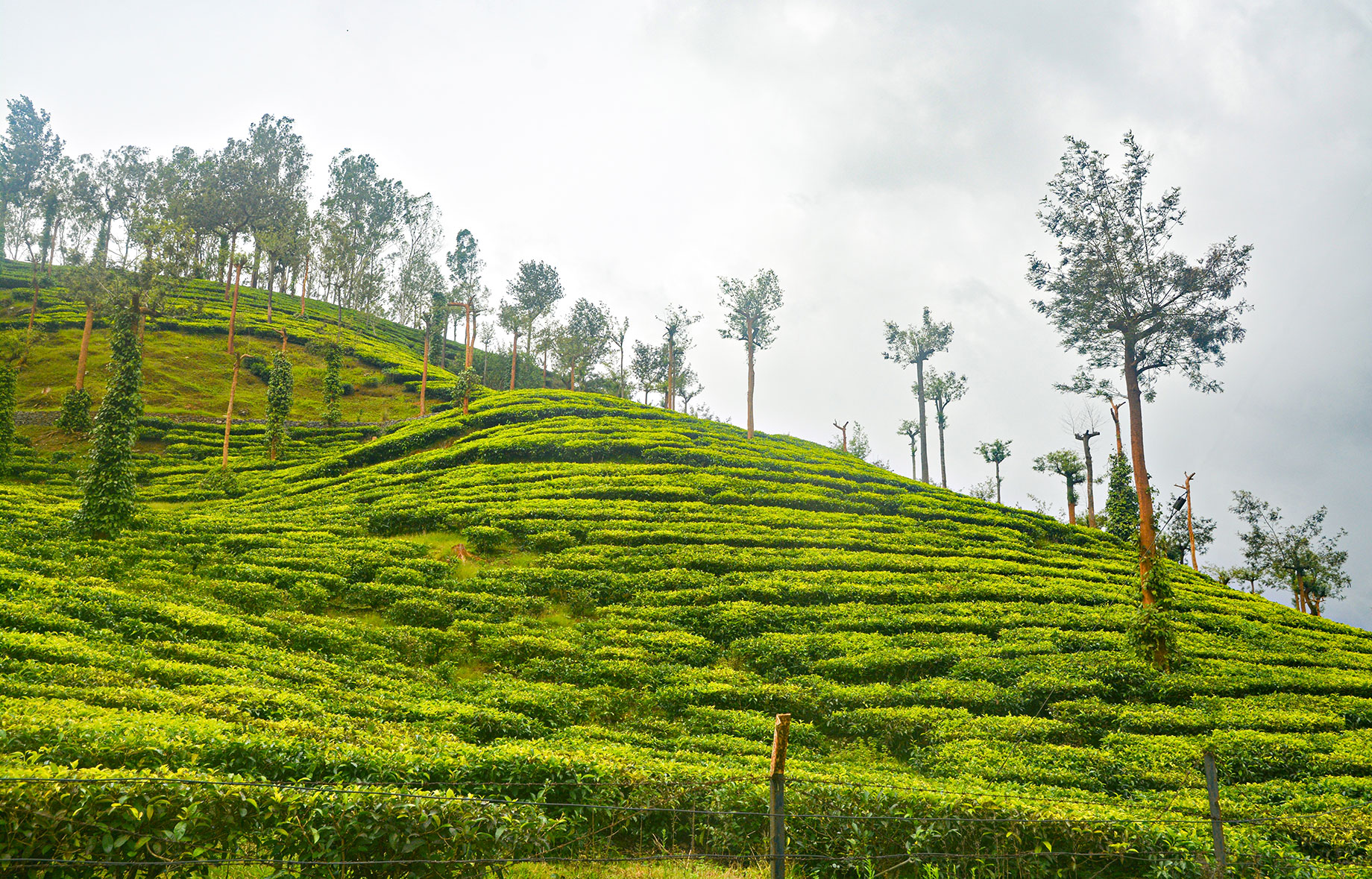
Perched along the mist-cooled ridges of Kerala’s Western Ghats, Thekkady is where jungle and spice country braid into one unforgettable escape in India. Dawn rises to the scent of cardamom and pepper; evenings hush with cicadas and the soft clink of teacups on shaded verandas. For travellers who favour wildlife, water, and an unhurried rhythm, this is Kerala at its most elemental.
If your idea of arrival is to trade traffic for birdsong, consider checking into one of the region’s refined plantation retreats—places that double as gateways to Periyar’s signature experiences. Several of the area’s luxury resorts in Thekkady pair jungle proximity with private-pool serenity and verandas perfumed by spice gardens, making them natural bases for a slow-travel itinerary.
The Lay of the Land
Thekkady’s magnetic core is Periyar Tiger Reserve, a highland mosaic of rainforest, shola grasslands, and a sinuous reservoir framed by ghostly tree stumps. Here, the forest is not a set piece—it’s a living, pulsing ecosystem. Mornings bring drongo calls and a gauzy light across the lake; by late afternoon, sambar and gaur graze along the shore while cormorants stake the half-submerged perches.
Just beyond the park gate, Kumily unfurls as a plantation town where cloves dry on courtyards and the air carries a savory warmth. Estate trails thread through shade-grown cardamom, pepper vines, and nutmeg, and guides—often growers themselves—explain how altitude, canopy, and monsoon cycles shape Kerala’s spice identity. It’s an easy, sensory counterpoint to the riverine hush inside Periyar.
A Day on the Lake
The classic introduction to Periyar’s landscape is a boat ride at golden hour. Instead of speed, think stillness: the hull moves with the rhythm of the reservoir while the shoreline becomes a flickbook—an egret’s fixed posture, the dip of a turtle, the sudden tension of jungle when a shadow suggests more. Wildlife is never guaranteed, but that uncertainty turns attention outward; you start to read the landscape, not just search it. Early morning or late afternoon departures tend to offer softer light and quieter banks, and advance reservations help if you’re travelling on weekends or holidays.
Bamboo, Trails, and Night Senses
Periyar’s signature bamboo rafting blends guided trekking with a meditative float. The day usually begins with a forest walk—boots pressing the damp earth, the canopy stitching green patterns overhead—before you step onto a raft and glide through mirror water. It’s more about immersion than adrenaline: kingfishers puncture the surface, otter tracks tattoo the mud, and the air smells of leaf and lake.
For deeper immersion, consider a full-day border hike that follows ridgelines between 900–1300 metres. These long, quiet miles reveal how the ecosystem knits together: elephant sign on clay, a hornbill flash in the upper canopy, long vistas that reset your sense of scale. After dark, the Jungle Scout walk—accompanied by trained guards—switches the channel from sight to sound: you notice owls by their questions, civets by a rustle, and your own heartbeat by how the forest holds it.
Spice & Stillness: Plantation Life
Back on the estates, the pace tilts toward ritual. Mornings begin with yoga on a breezy deck; afternoons fold into spice walks where pepper vines spiral up living supports and cardamom pods reveal their camphorous secret under a guide’s knife. Families appreciate resorts that balance nature access with thoughtful amenities—open-air pools, lawns for play, and kid-friendly menus—among the region’s best resorts in Thekkady for family. Couples find privacy in villa suites with deep verandas and outdoor showers. Everyone, it seems, finds an excuse for one more pot of tea.
When to Go (At a Glance)
| Season | Weather | Best For | Notes |
|---|---|---|---|
| Oct–Feb (Peak) | Pleasant days, cool nights (≈15–27°C) | Boating, trekking, plantation tours | Book early—holiday and weekend demand is high |
| Mar–Apr (Dry) | Warmer afternoons | Concentrated wildlife near water | Choose earliest lake departures for comfort and sightings |
| Jun–Sep (Monsoon) | Lush, frequent showers | Spice-estate stays, photography, fewer crowds | Build flexibility into your plans; trails may close in heavy rain |
Periyar Experiences (Quick Reference)
| Experience | Typical Duration | Character | Good to Know |
|---|---|---|---|
| Periyar Lake Boat Ride | ~90 mins | Scenic, relaxed | Prime slots: early morning & late afternoon; reserve seats ahead |
| Bamboo Rafting | Half day | Trek + tranquil float | Wear sturdy shoes; carry water, a light snack, and sun protection |
| Border Hike | Full day | High-ridge trekking | Moderate fitness helps; expect varied elevation and terrain |
| Jungle Scout (Night) | 2–3 hrs | Nocturnal nature walk | Dark, quiet clothing; follow guides closely; limited daily slots |
Getting There
Thekkady sits in Kerala’s Idukki district near the Tamil Nadu border. Madurai (IXM) is the closest airport—roughly a 3.5–4.5-hour drive depending on traffic and weather—while Kochi (COK) serves as the key international gateway at around 4–5 hours by road into the hills. Drivers familiar with the ghats are worth the extra rupees; the mountain curves are part of the romance, but they’re better enjoyed from the passenger seat. If you prefer rail, Kottayam is a commonly used railhead with onward taxis and buses climbing through rubber and tea estates to Thekkady.
A 48-Hour Sketch
Day One eases you into the landscape. Arrive by midday, settle into your veranda, and let a plantation lunch reset your internal clock. As the heat softens, head to the lake for the golden-hour boat ride. Dinner is unhurried and open-air—grilled river fish, Kerala parotta, and the kind of quiet you didn’t realize you missed.
Day Two is for texture. Begin with bamboo rafting or a long, scenic hike, then a pool-and-tea interlude back at the resort. Toward dusk, join a spice walk to understand what you’ve been smelling all along; if energy allows, close the day on a guided night walk where your eyes adjust and the forest introduces itself by sound.
Responsible Travel
Periyar’s programs are designed to be conservation-positive; book official, guided activities and keep to instructions in the field. Wildlife is unscripted—celebrate the landscapes, not just the sightings. Carry a refillable bottle, pack out what you bring in, and respect that communities here live with the forest every day. If you’re visiting with children, make the etiquette part of the adventure: quiet voices, careful feet, keen eyes.
Practical Notes
- Money & Tickets: Some activities accept digital payments but can sell out—reserve adventure slots ahead during peak months.
- What to Pack: Lightweight layers, a rain shell (year-round in the hills), grippy shoes for trails, binoculars if you’re a birder, and a dry bag for phones on the raft.
- Health & Safety: Leeches are seasonal; a dash of salt or leech socks solves the nuisance. Guides are trained—listen first, step second.
- With Kids: Choose early departures, leave space for naps and swims, and keep snacks handy between activities.