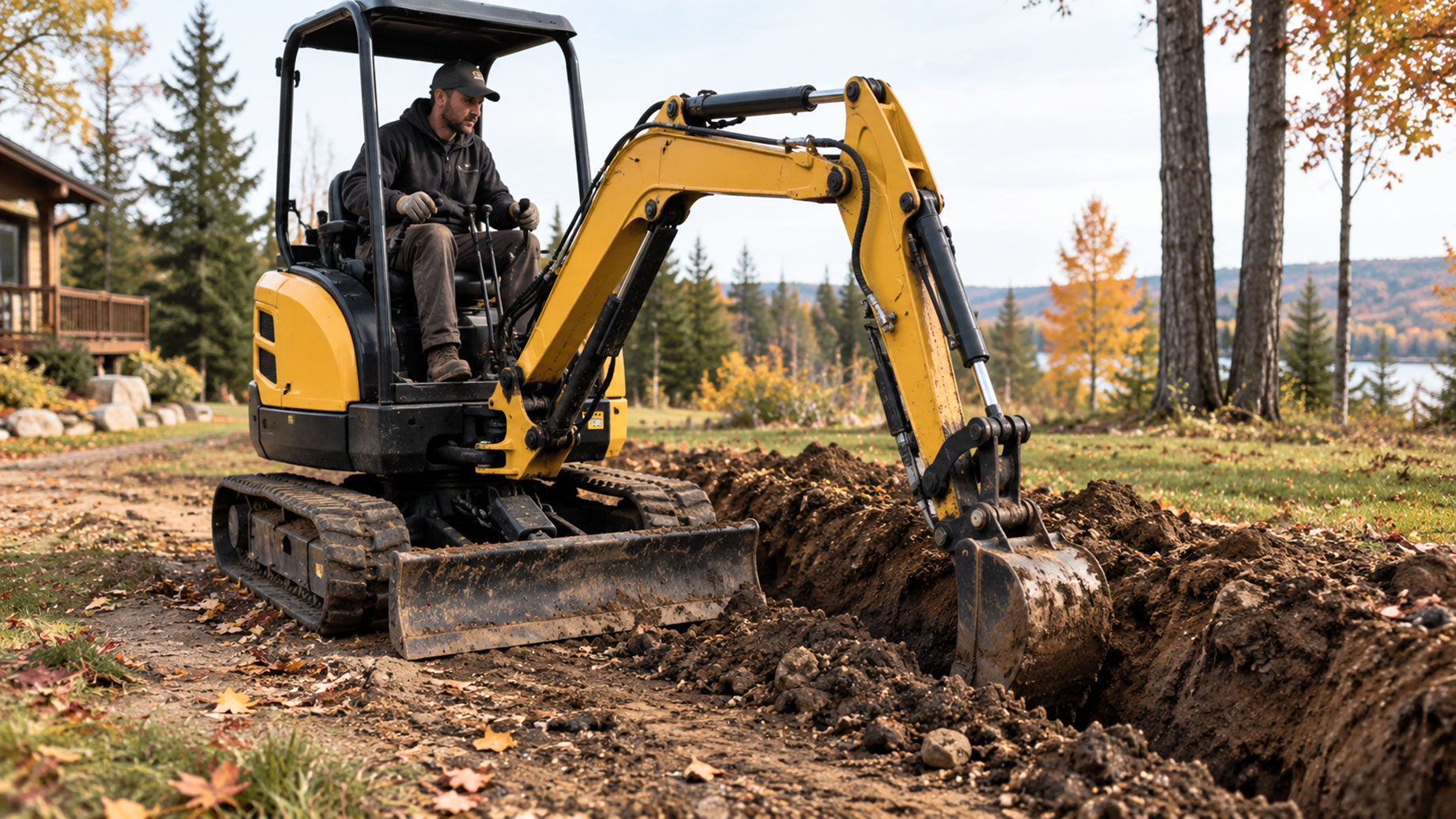
A machine that pushes harder than it weighs
A compact machine weighing about 2,200 pounds can be rated at well over 2,000 pounds of digging force, and some are rated above their own weight. That sounds impossible until the figure is understood. For anyone planning to use a mini excavator to trench, dig footings or clear drainage before the Canadian ground freezes this fall, the difference between digging and lifting is the most useful thing to understand.
Digging pushes against the ground
When the bucket curls into soil, the hydraulic cylinder pushes the teeth one way and pushes the machine the other. The ground in front of the bucket and the tracks beneath the machine both take part in resisting that force, so the machine’s weight is only part of what holds it in place.
That is why a 1 ton mini excavator can break out compacted clay with a force greater than its own mass. The force is contained within a loop that runs from the bucket through the arm, the boom and the tracks, back into the same ground.
Lifting has nothing to push against
Lifting a load is different. A pipe or a rock hanging from the bucket pulls the front of the machine down, and the only thing resisting that pull is the machine’s weight on the far side of its tipping point.
Lifting over the end of the tracks uses their full length as a lever. Swinging the same load over the side shortens that lever to the width of the tracks, which is much narrower, so the safe load drops sharply. A load swung sideways on uneven ground is one of the classic ways a small excavator tips.
The dozer blade helps when it is used. Lowered firmly to the ground, it widens the base on its end of the machine, which is why lifts are safer made over the lowered blade with the load kept close and low.
How mini excavator attachments shift that balance
Every attachment adds weight at the end of the arm and changes how far out the load sits. On a machine this size those few extra pounds, placed at full reach, matter far more than the same weight would sitting near the cab.
- Hydraulic thumb: grips rock and logs, adds tip weight
- Auger: drills post holes, needs auxiliary hydraulics
- Grading bucket: wide finish passes, heavy when full
- Ripper tooth: concentrates force for hard clay
Attachments that sit far from the pivot reduce what the machine can lift safely, even when the attachment itself is light. Reading the lift chart with the attachment’s weight counted as part of the load gives a truer picture than the bucket rating alone.
Call before the first bucket
Utility lines can run shallower than expected. In Canada, Click Before You Dig and the provincial one-call centers arrange free locates, and marking lines before the ground freezes avoids both danger and a winter repair bill.
Timing matters for another reason. Once frost reaches a few inches deep, the top layer turns hard enough to chip bucket teeth and slow a small machine to a crawl, so trenches and footings planned for this year are easier to finish in September and October than in December.
For a single fence line or drainage trench, a mini excavator rental is often the practical choice, while ongoing property work makes ownership sense. TMG Industrial rates its 2,200 pound compact model at 2,765 pounds of digging force, a figure about digging, not about what the machine can safely lift.