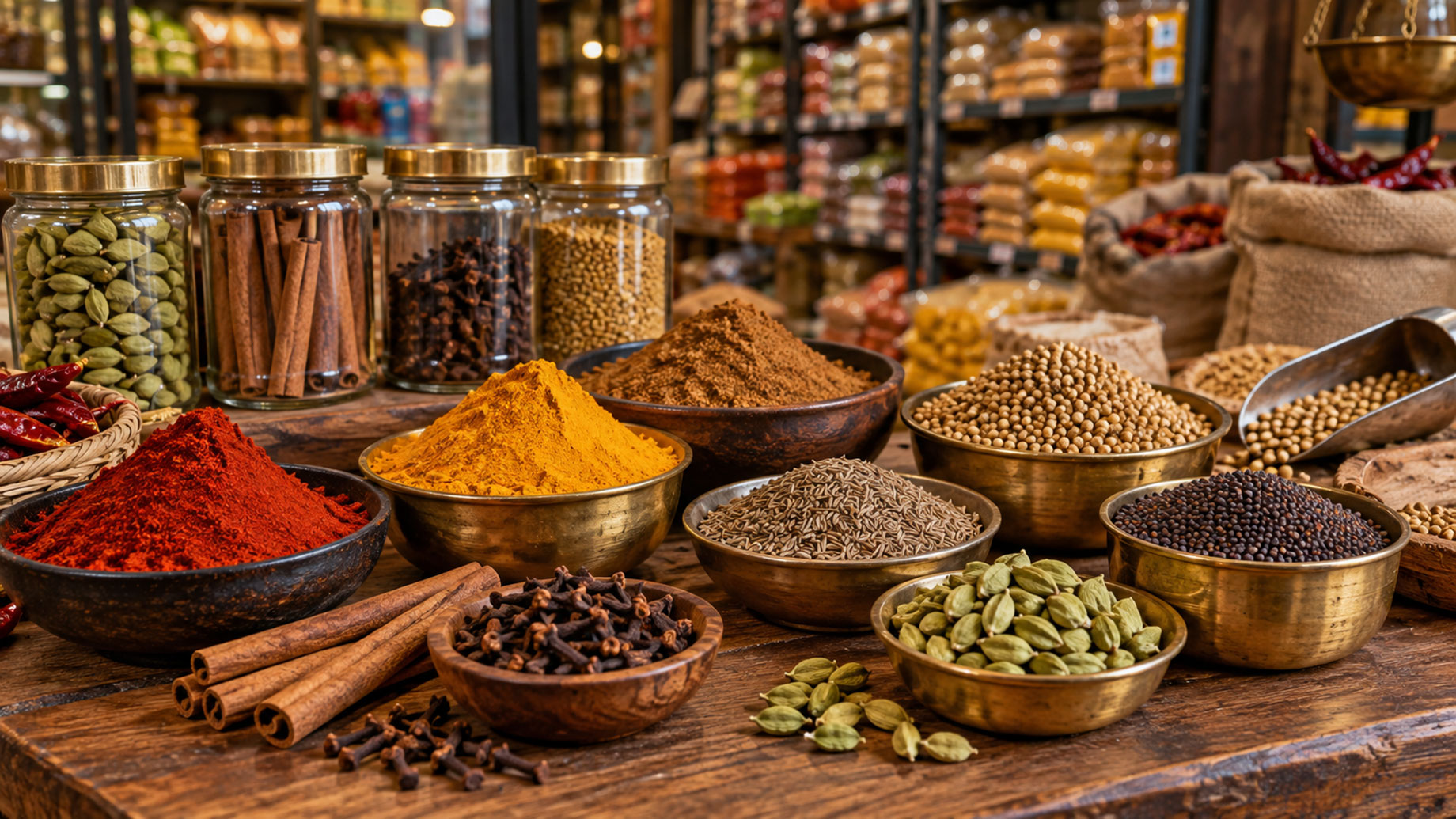
Indian cooking relies heavily on spices, and that can be what puts people off trying it in the first place. Spice aisles in a well-stocked Indian grocery store near me can hold dozens of jars, packets and tins, some with names that are unfamiliar if you are new to Indian cuisine. The reality is simpler than it looks. A small set of core spices covers most everyday Indian dishes, and you can add to that set gradually as you cook more.
This guide covers the spices worth having in your kitchen, how to store them, and what to look for when buying them.
The Spices Every Indian Kitchen Needs
Around eight to ten spices form the base of most Indian recipes.
Turmeric (Haldi)
Turmeric appears in almost every curry and dal. It gives dishes their yellow colour and a mild, earthy taste. Only a small amount is needed per dish.
Cumin Seeds (Jeera)
Cumin seeds are used for tempering, where whole spices are fried briefly in hot oil or ghee at the start of cooking. This step releases their flavour into the oil before the rest of the ingredients go in.
Coriander Seeds (Dhania)
Coriander seeds have a citrusy, slightly sweet taste and are often paired with cumin. Ground coriander shows up in most curry powders.
Mustard Seeds (Rai)
Mustard seeds are common in South Indian dishes and pickles. Once tempered, they take on a nutty flavour.
Red Chilli Powder (Lal Mirch)
Red chilli powder adds heat and colour. Kashmiri chilli powder is milder and used mostly for colour rather than heat.
Garam Masala
Garam masala is a blend of warming spices, including cinnamon, cloves, cardamom and black pepper. It is usually added near the end of cooking.
Cardamom, Cinnamon and Cloves
Cardamom (Elaichi), cinnamon sticks (Dalchini) and cloves (Laung) are used in both savoury dishes and chai.
Once these are familiar, spices like fenugreek, asafoetida (hing), carom seeds (ajwain) and regional blends such as sambar powder can be added.
Whole Spices or Ground
Whole spices hold their flavour longer than ground ones. Cumin, coriander seeds, black peppercorns and cardamom are worth buying whole and grinding as needed, since freshly ground spices taste noticeably stronger than pre-ground versions that have been sitting for months.
Some spices are more practical bought ground. Turmeric is hard to grind at home, and blends like garam masala are easier to buy ready-made unless you are set up to mix your own. A reasonable approach is to buy whole where the difference matters, and ground for the rest.
Spice Blends Worth Keeping on Hand
A few pre-mixed blends save time in the kitchen:
- Garam masala, for finishing curries and dals
- Chaat masala, for snacks and fruit
- Biryani masala, for rice dishes
- Chai masala, for tea
Blends differ between brands, so trying a few can help you find one that suits your taste.
How to Store Indian Spices
Spices lose strength over time, particularly once ground. A few habits help them last:
- Keep spices in airtight containers, out of direct light
- Store them in a cool, dry cupboard, away from the stove
- Use whole spices within two to three years, and ground spices within one to two years
- Label containers with the purchase date if buying in bulk
Buying smaller amounts more often tends to work better than stocking up on a large batch that sits unused for years.
Common Mistakes When Using Indian Spices
A few small errors are easy to make when you are still getting used to cooking with these spices.
Adding Ground Spices Too Early
Ground spices like turmeric or chilli powder can burn quickly in hot oil, which turns the flavour bitter. They are usually added after whole spices have been tempered, or once other ingredients are already in the pan.
Skipping the Tempering Step
Whole spices release much more flavour when briefly fried in oil or ghee than when added straight into a liquid-based dish.
Buying Large Packs for Occasional Use
Rarely used spices are better bought in small quantities, since they lose potency before you get through the packet.
Storing Spices Near the Stove
Heat and steam from cooking shorten the shelf life of both whole and ground spices, even in a sealed container.
Being aware of these habits early on can save both flavour and money as you build up your spice collection over time.
Buying Indian Spices in Melbourne
Availability and freshness both matter when shopping for spices. In person, you can check pack sizes, compare brands and see what is currently in stock. Buying online through a grocery delivery service is a practical option if you would rather order little and often, particularly for staples you go through quickly, like cumin or turmeric.
Whichever method you use, a wider selection of brands and pack sizes makes it easier to try a spice in a small quantity before committing to a larger one.
Final Thoughts
An Indian spice pantry does not need to be built all at once. Starting with the essentials, storing them properly, and adding new spices as recipes call for them is a manageable way to go about it. Once you know which spices you reach for most, restocking becomes routine rather than a chore.
If you are looking for an Indian grocery store near me with a full spice range and everyday essentials, Grocerz stocks all of the above and delivers across selected Melbourne suburbs.