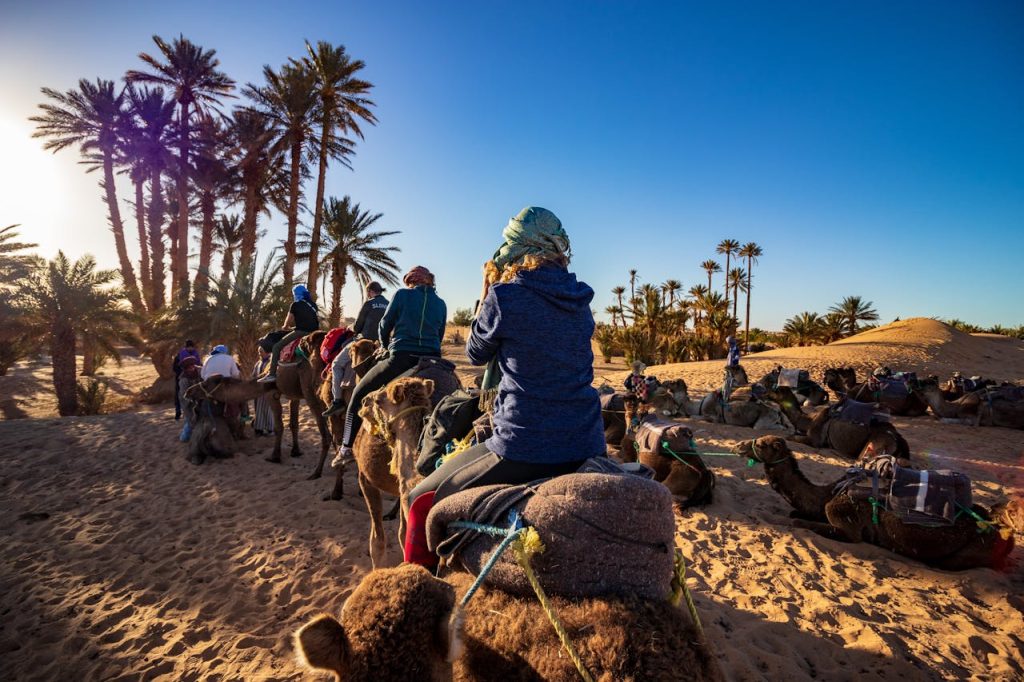
When most travelers think of Morocco’s Sahara Desert, their minds immediately conjure images of towering dunes and camel caravans silhouetted against orange sunsets. While these iconic scenes are undeniably breathtaking,
Morocco’s desert landscape holds secrets that extend far beyond the well-trodden paths of popular tourist destinations.
The Unexplored Saharan Wilderness
Morocco’s desert regions offer a tapestry of experiences that range from accessible luxury to raw, untouched wilderness. Each erg the Arabic word for a large sea of sand dunes possesses its own unique character, ecosystem, and appeal.
Understanding these differences can transform your desert adventure from a simple excursion into a profound journey of discovery.
Erg Zahar: Morocco’s Best-Kept Desert Secret
While destinations like Erg Chebbi have gained international recognition, savvy travelers are increasingly seeking out lesser-known territories that offer equally stunning landscapes without the crowds. Among these hidden treasures, Erg Zahar trips with Desert Sahara Life provide an unparalleled opportunity to experience the Sahara in its most pristine and authentic form.
Erg Zahar distinguishes itself through its remote location and untouched beauty. Unlike more commercialized desert areas, this expansive dune field remains relatively undiscovered, offering visitors a genuine sense of isolation and connection with the desert’s raw power.
The dunes here stretch endlessly across the horizon, their curves shaped by centuries of wind into mesmerizing patterns that change with every passing hour.
Pristine Wilderness
The remoteness of Erg Zahar is both its defining challenge and its greatest asset. Reaching this desert sanctuary requires commitment and proper planning, but the reward is an experience of the Sahara as it has existed for millennia unspoiled, silent, and profoundly moving.
The journey typically involves traversing ancient caravan routes, crossing hammada (stone desert), and navigating through landscapes that seem to belong to another world entirely.
Authentic Berber Culture
The journey to Erg Zahar often passes through traditional Berber villages where time seems to have stood still. These communities maintain ancient traditions of hospitality and desert survival, offering visitors genuine insights into a way of life that has endured for generations.
Unlike tourist-focused areas where cultural experiences can feel staged, interactions here carry an authenticity that resonates deeply with thoughtful travelers.
Sharing mint tea with nomadic families, learning traditional bread-making techniques, and listening to stories passed down through generations become natural parts of the experience rather than orchestrated tourist activities.
Stargazing Paradise
With virtually no light pollution, Erg Zahar transforms into one of North Africa’s premier stargazing destinations after sunset. The Milky Way stretches across the sky in vivid detail, while meteor showers and planetary movements become nightly entertainment.
Many travelers report that the night sky alone justifies the journey to this remote corner of the Sahara. The silence of the desert amplifies the sense of cosmic vastness, creating moments of contemplation that are increasingly rare in our illuminated, connected world.
Read more: Morocco Desert Tours: Where Culture and Adventure Meet
What Makes Desert Expeditions Transformative?
Desert expeditions to places like Erg Zahar offer more than scenic beauty—they provide a fundamental shift in perspective. The desert has always been a place of transformation in human history. Prophets, poets, and philosophers have sought the desert’s emptiness as a canvas for contemplation.
The complete silence, so profound it becomes almost tangible, allows for a type of introspection that’s nearly impossible to achieve in our normal environments.
The physical experience of the desert also creates lasting memories. Walking barefoot across dunes at sunrise, feeling the sand shift beneath your feet, watching the play of light and shadow across endless waves of sand these sensory experiences engage us in ways that transcend typical tourism.
There’s something primal about sleeping under stars so bright they cast shadows, about waking to watch the sun paint the dunes in shades of gold and amber.
Planning Your Desert Adventure
Choosing the right travel partner becomes crucial when venturing to remote areas like Erg Zahar. Expert guides don’t just navigate the trackless sands; they open doors to experiences and perspectives that independent travelers simply cannot access.
They understand the desert’s moods, know where to camp for the best sunrise views, and maintain relationships with local communities that enable authentic cultural exchanges.
What to Expect
Desert expeditions to Erg Zahar typically involve several key elements. Transportation is handled by specialized 4×4 vehicles designed for desert terrain, driven by experienced navigators who can read subtle landscape features invisible to untrained eyes.
Accommodation consists of traditional Berber tents that provide shelter while maintaining connection to the environment. Meals are prepared using traditional methods, often cooked over open fires, featuring local ingredients and time-honored recipes.
The daily rhythm follows natural patterns rather than rigid schedules. Mornings begin before dawn to witness sunrise and take advantage of cooler temperatures for exploration. Midday heat is spent resting in the shade, perhaps sharing stories with guides or simply absorbing the desert’s tranquility.
Afternoons bring opportunities for camel rides, sandboarding down massive dunes, or hiking to elevated viewpoints. Evenings center around the campfire, with traditional music, storytelling, and star observation filling the hours before sleep.
Best Time to Visit
Timing your Erg Zahar expedition correctly can mean the difference between a challenging ordeal and a transcendent experience.
Spring months from March through May offer ideal conditions, with comfortable daytime temperatures perfect for exploration and pleasantly cool nights. Autumn, particularly September through November, provides similarly favorable weather while showcasing the desert in different light as the angle of the sun changes with the seasons.
Summer months bring intense heat that can be overwhelming, with temperatures regularly exceeding 45°C (113°F). While the desert holds a stark beauty even in extreme heat, the physical demands increase significantly.
Winter presents the opposite challenge while days remain pleasant, nights can drop to near-freezing temperatures, requiring substantial cold-weather gear for comfortable camping.
Essential Preparations
Physical preparation, while not requiring extreme fitness, does matter. Walking on sand demands more energy than walking on solid ground, and the dry desert air can be dehydrating.
Starting a basic fitness routine several weeks before departure, focusing on walking and general cardiovascular health, ensures you’ll have the stamina to fully enjoy the experience rather than merely endure it.
Packing requires balancing essentials against the reality of limited space. Clothing should consist of lightweight, breathable layers that can be added or removed as temperatures fluctuate. Long sleeves and pants protect against sun and wind-blown sand while keeping you cooler than exposed skin.
A warm jacket or fleece becomes essential for cold desert nights. Sturdy, comfortable footwear suitable for walking on sand preferably closed-toe to prevent sand from accumulating—makes exploration more enjoyable.
Sun protection cannot be overstated. High-SPF sunscreen, protective headwear with neck coverage, and quality sunglasses with UV protection are non-negotiable. The desert sun reflects off sand, intensifying exposure from multiple angles.
A reusable water bottle helps maintain hydration, though guides typically manage water supplies for the group.
Sustainable Desert Tourism
As interest in remote desert destinations grows, responsible travel practices become increasingly important. The desert ecosystem, despite its harsh appearance, is actually quite fragile. Vegetation takes decades to recover from damage, while animal populations adapted to harsh conditions are easily disrupted by human presence.
Desert-adapted species like fennec foxes, desert hedgehogs, and various reptiles survive in delicate balance with their environment.
Reputable operators prioritize low-impact practices by using established campsites that concentrate human impact in specific areas, packing out all waste including biodegradable materials that decompose slowly in the arid environment, respecting wildlife observation distances to avoid disturbing natural behaviors, and supporting local communities through fair wages and economic opportunities that provide alternatives to unsustainable practices.
The Lasting Impact
Leaving Erg Zahar often proves emotionally difficult. After days of simplicity, silence, and natural rhythms, the return to civilization can feel jarring. Many travelers report that their time in the deep desert shifts their perspective fundamentally, making them more conscious of consumption patterns, more appreciative of simplicity, and more aware of nature’s fundamental importance to human wellbeing.
This transformation isn’t mere romantic idealism it represents a common response to removing ourselves from familiar contexts and experiencing environments that challenge our assumptions about necessity and comfort.
The desert strips away the superfluous, leaving only what matters: shelter, sustenance, companionship, and the eternal rhythms of nature.