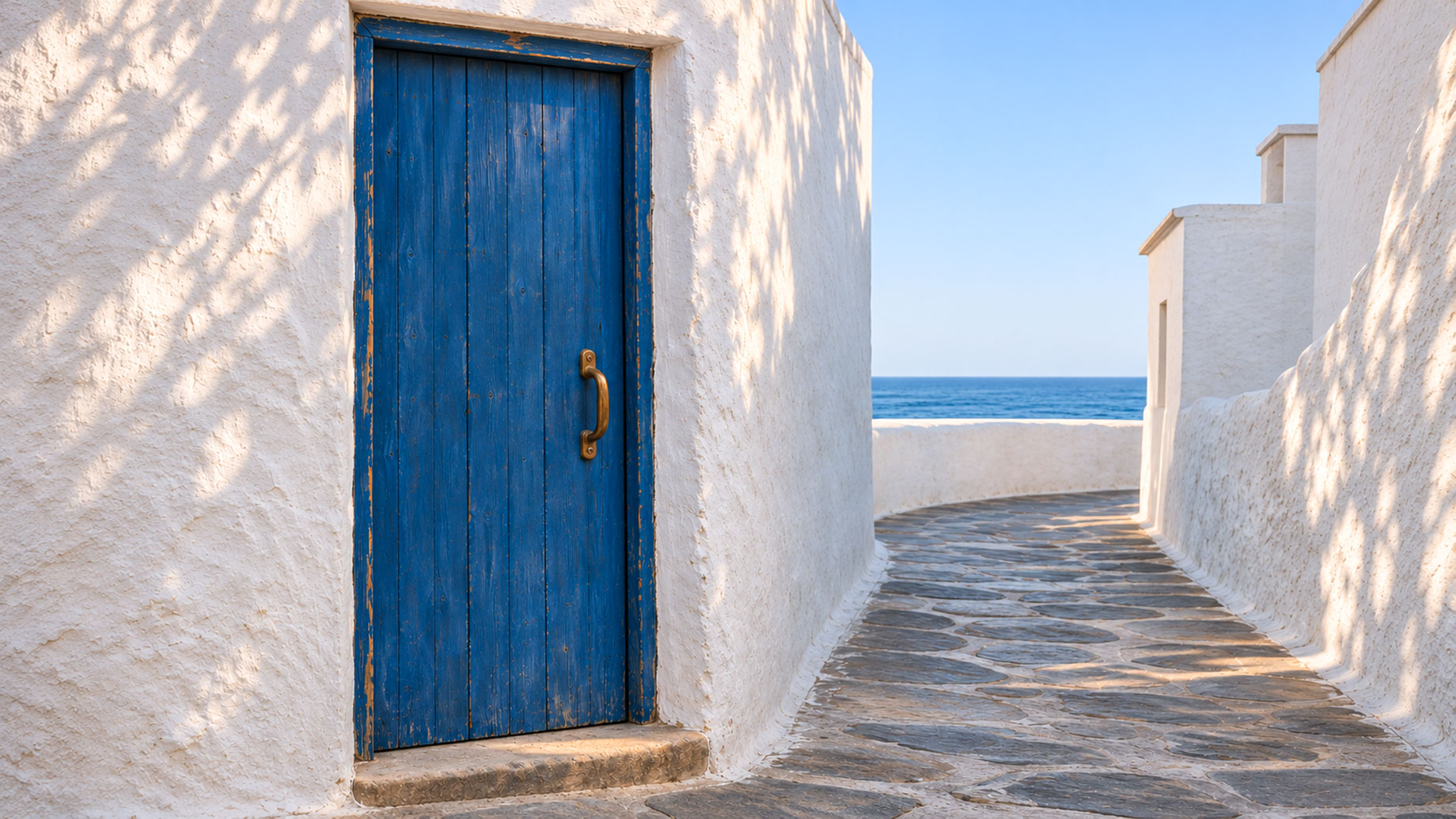
The sea is audible before it is visible. A camera moves past a blue door, follows a narrow lane, and reaches a small terrace above the water. For a travel video concept, you could build around that delayed reveal. The destination would be an imagined coastal village, inspired by your own reference photographs rather than presented as a guide to a real route. The little journey would give the viewer a reason to keep watching.
You could plan a forty-second sequence with three connected places: the doorway, the lane, and the terrace. The route would feel walkable, but it would remain a clearly labeled visual concept. If the project later promoted an actual destination, you would replace invented geography with verified location material. A beautiful turn in a generated street should never become an instruction that sends a traveler toward a path that does not exist.
Start with what the camera can reveal
Your first reference could be a photograph of a plain blue door in warm light. A second would show a narrow lane with a visible bend, and a third would establish the desired sea view. Choose images with compatible light and architecture. A mix of different roof styles, street widths, and times of day would make the route feel like several unrelated places rather than one brief walk.
The transition from enclosed lane to open water is where seedance 3.0 would enter the proposed workflow. Text can describe the direction of travel, images can establish each space, and video or audio references can suggest the pace and atmosphere of the walk. You could generate short passages around those references, then connect them in editing. The aim is a coherent travel film, not a collection of disconnected scenic effects.
The opening shot would stay close to the door, with a strip of sunlight crossing the threshold. Leave a little room on the right for the camera to move into the lane. That empty space matters because it prepares the next action. If the door fills the entire frame, the cut to the street may feel abrupt. The viewer should sense a path opening before the broader view appears.
Keep the walk at a human pace
For the first seedance 3.0 movement, describe a slow forward drift past the doorway, with the wall remaining straight and the door staying in place. The camera should feel close to a person’s eye level, rather than flying above the roofs. A modest movement can preserve the intimacy of the scene and make the later sea view feel earned. Starting with an aerial panorama would reveal the destination too early.
A short reference clip of a gentle walking movement could help define the rhythm. Choose one with minimal bouncing and no sudden turn. Its purpose would be to communicate how the camera moves, not to provide the location itself. The still image would remain the visual reference for the lane, while the text brief specifies the direction and the point where the shot should settle.
The second seedance 3.0 passage would approach a bend without turning all the way around it. That gives the editor a natural cut point. You could then begin the terrace shot from a similar position, letting the open water arrive in the next view. Asking one generated clip to negotiate several corners could create confusing geometry. A deliberate cut can make a simpler set of images feel like a convincing journey.
Use the first draft to test the geography
In a seedance 3.0 draft, watch the edges of the buildings before judging the sea or the sky. If a wall stretches or a doorway appears halfway through the movement, the village stops feeling like a place. A revision could reduce the camera distance and remove unnecessary details from the prompt. A shorter lane with one clear bend is enough for this story; extra balconies and shopfronts are optional distractions.
Also check whether the sea appears on the correct side at the reveal. The opening sound suggests a direction, and the camera movement should support it. If the water suddenly appears behind the viewer, the route may feel disjointed. Revise the terrace framing so the final movement continues the direction established beside the blue door. The audience does not need a map, but it does need visual continuity.
Another seedance 3.0 version might produce dramatic waves when the intended mood is quiet. In that case, ask for restrained surface movement and keep the horizon stable. The terrace should feel like a place to pause after a short walk. A stormy sea would create a different story, one about weather and urgency rather than a gentle arrival. The revision should preserve the purpose of the scene, not merely change its color.
Let sound arrive around the corner
Begin the edit with a soft sea ambience under the doorway shot. The sound would become a little clearer as the lane opens, then spread out when the terrace appears. A brief audio reference can help communicate the intended feeling of a generated passage, but you could assemble the final soundscape separately. That gives you control over the gradual change without depending on every clip to supply a matching soundtrack.
Footsteps would be quiet and occasional. Avoid filling the lane with invented conversations, traffic, or restaurant noise unless those sounds support the specific concept. Music could enter only at the sea reveal, perhaps with one sustained phrase. Silence between details can make a travel film feel more immediate than a constant soundtrack. The viewer should have room to imagine the air and the distance beyond the terrace.
Make the final view a place to stay
The last seedance 3.0 shot would hold on a simple terrace edge with the water beyond it. Avoid adding a drone rise or a rapid panoramic turn. The preceding movement has already brought the viewer somewhere; the ending should let them arrive. A chair or a small plant could provide scale, but the horizon and the open space should remain the main subjects.
For a vertical version, check the crop while planning the terrace shot rather than cutting away most of the view afterward. The blue door, lane, and final edge should each remain recognizable on a phone. Any place name or concept label would be added in the editor. If real location information later became part of the project, you would verify it independently before placing it over the footage.
The finished seedance 3.0 concept would be a short visual journey with one clear promise: follow a familiar detail until the landscape opens. Keep the reference images and edited sequence together so future revisions preserve the same route and atmosphere. Whether the idea becomes a destination pitch or a personal creative exercise, the film should make the transition from narrow street to open sea feel considered, calm, and complete.