Booking a week in the sun is the easy part of a winter trip. The harder part is the house you leave behind. A home in Montreal, Toronto or Minneapolis has to get through a cold snap, a snowstorm and maybe a freezing-rain night without anyone inside to notice that something has gone wrong.
Most of what goes wrong in an empty winter house falls into three groups: water, the roof, and the paperwork that decides whether your insurer pays. A couple of hours of preparation covers all three, and it is far cheaper than coming home tanned to a flooded basement.
Start with the insurance policy, not the suitcase
This sounds dull, but it shapes every other step. The Insurance Bureau of Canada says that most home, condo and tenant policies keep covering your property while you are on vacation, with one key exception: if the home will be unoccupied for more than 30 days, you have to tell your insurer. For a short trip you usually don’t need to call anyone.
The detail that catches travellers is the condition attached to winter absences. Many insurers require that someone visit the property while you are away to make sure the heat is still running and the pipes have not frozen. The IBC suggests a check every three days in winter, and some policies ask for daily visits unless the water is shut off and the pipes drained. If a pipe bursts and nobody came by, the claim can be refused. Read your own policy, then ask your broker what “regularly” means for you, and get the answer in writing if you can.
Look up before you leave: snow, ice and the roof
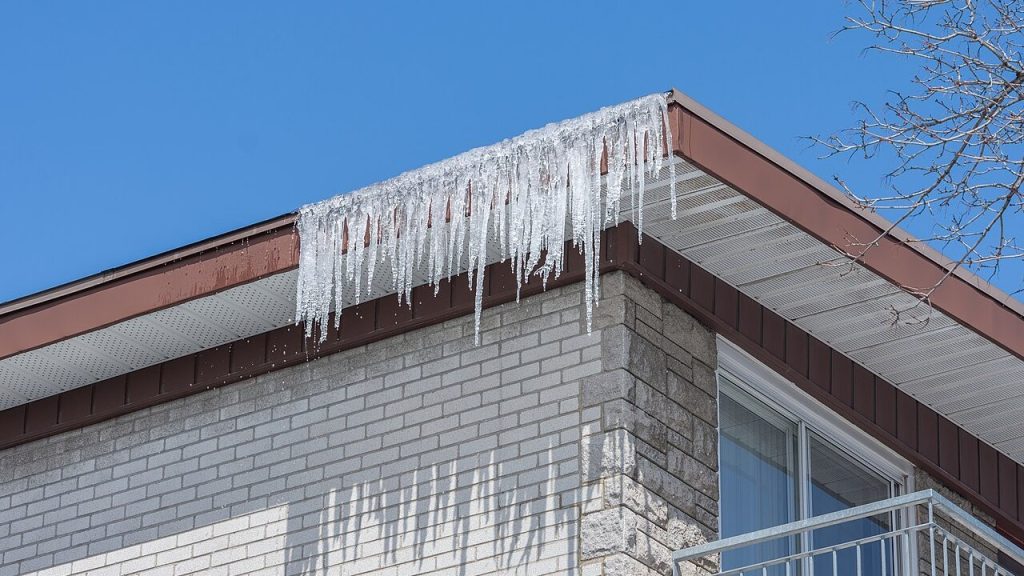
A roof is rarely in danger after an ordinary snowfall. The trouble starts with heavy, wet snow, rain falling on an existing snowpack, or a thaw followed by a hard freeze. CAA points out that wet snow and ice weigh far more than light, fluffy snow, and that ice dams form when warm air from the attic melts snow on the roof and the water refreezes at the colder edge. That trapped water can work its way under the shingles and into the ceiling, and you won’t see the stain until you get home.
Before a trip, a quick look from the driveway tells you a lot. Things worth acting on:
- a thick ridge of ice or a row of long icicles along the edge of the roof;
- snow drifted heavily against a taller wall, a dormer or into a valley;
- gutters still packed with autumn leaves, which give meltwater nowhere to go;
- vents or a chimney buried under snow.
If the forecast calls for a big storm or freezing rain while you’re gone, arrange snow removal ahead of time instead of hoping the neighbour will notice. In the Laval and North Shore area north of Montreal, for example, Squidgee Maintenance clears snow and ice from roofs and drains, and a company like that can be booked to come by after a storm, with a trained crew on the roof rather than a house-sitter on a ladder. Good roof clearing also leaves a thin layer of snow on the roof surface, because scraping down to the shingles can damage them.
Whoever you hire, ask two questions: do they carry liability insurance, and will they send a photo once the job is done? That photo is useful proof if your insurer asks later what was done while you were away.
Water: the biggest risk in an empty winter house
Frozen and burst pipes are the classic winter claim, and an empty house makes them worse because a leak can run for days. A few steps cut the risk sharply:
- Keep the heat on. CAA recommends setting the thermostat to at least 12°C (about 54°F) while you’re away. Leave doors under sinks and to rooms with plumbing open so warm air reaches the pipes.
- Shut off the main water valve if your heating system allows it, then open the taps to drain the lines. Homes heated by a boiler or with a fire-sprinkler system need a professional’s advice first.
- Close the supply valves to the washing machine and dishwasher, two common sources of slow leaks.
- Shut off and drain outdoor faucets, and make sure garden hoses were disconnected in the fall.
- Add cheap sensors. A water-leak sensor near the water heater and a low-temperature alert that sends a message to your phone let you call someone the same day instead of finding out a week later.
Make the house look lived in
A driveway with three days of untouched snow tells everyone the house is empty. Arrange snow clearing for the driveway and front steps, pause or forward mail and parcels, and put a few lamps on timers. Some smart plugs can switch lights at slightly different times each day, which looks more natural than a lamp clicking on at exactly 6:00 p.m.
Keep vacation photos off public social media until you’re back. It’s an easy habit, and it means you aren’t announcing an empty house to people you don’t know.
Leave clear instructions for the person checking in
The house-sitter, neighbour or relative who checks the property is your safety net, so make their job easy. Leave a one-page sheet on the kitchen counter with:
- where the main water valve and the electrical panel are;
- the thermostat setting it should show, and what to do if it’s lower;
- phone numbers for your plumber, your snow removal company and your insurer’s claims line;
- a request to send you a quick photo of the thermostat and the basement on each visit.
Those photos double as a record of the visits, which matters if your policy requires them.
A final walk-through on departure day
On the morning you leave, take ten minutes for one last loop: thermostat set, water off or sensors armed, appliances unplugged, windows locked, garage door closed, and a last look at the roof edge and gutters from outside. Then lock the door and enjoy the trip. A house that has been prepared properly is one less thing to think about while you’re away.