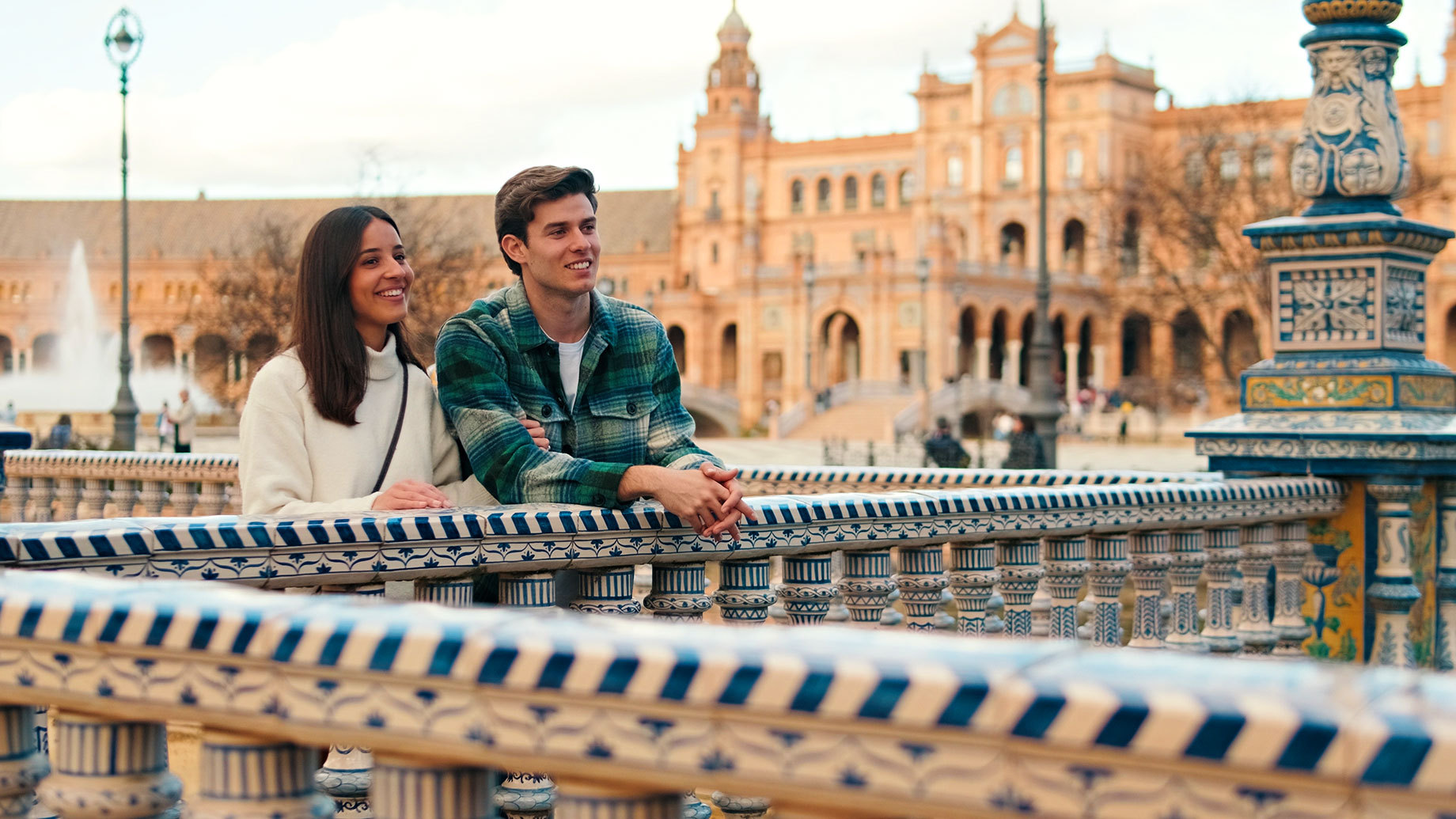
Seville is one of those cities that seems designed for two people walking slowly: orange trees in the squares, tiled courtyards, narrow lanes that open onto a plaza just as the evening cools down. It is also a city where timing changes everything. The same street that feels magical at eight in the morning can be crowded and baking hot at two in the afternoon. This itinerary is built around that rhythm, so you see the best of Seville in the best light, and come home with photos you actually want to keep.
When to go
Spring (March to May) and autumn (late September to November) are the sweet spots: warm days, mild evenings and soft light. Spring brings orange blossom and the city’s big festivals, so book early if your dates fall around Easter or the April Fair. Summer is beautiful but fierce; afternoons regularly pass 40°C, so plan anything outdoors for early morning or after sunset. Winter is quiet and mild, with clear, low light that photographers love.
Where to stay
Santa Cruz, the old Jewish quarter, puts you within walking distance of the Cathedral and the Alcázar, ideal if you want to be out early. El Arenal, between the Cathedral and the river, is calmer and close to the evening walks along the Guadalquivir. Triana, across the river, has a more local feel, with ceramic workshops, tapas bars and the best view back towards the city at sunset. If you prefer bars and a younger crowd, look at the Alameda de Hércules.
Day one: palaces, courtyards and Plaza de España
- Morning. Start at the Real Alcázar. Book a timed ticket online and take the first slot of the day: the gardens are at their quietest and the light through the arches is soft and warm. Allow two hours; the palace rooms and the gardens deserve it. From the Alcázar, wander into the lanes of Barrio Santa Cruz. Callejón del Agua, which runs along the old wall, and the small squares around Plaza de Doña Elvira are lovely before the tour groups arrive. Stop for coffee in a shaded square and let the morning unfold.
- Midday. Do as the locals do: a long lunch of tapas, then a rest. Seville slows down in the early afternoon, and so should you, especially between June and September.
- Evening. Head to Plaza de España about an hour before sunset. The huge semicircular building faces the sinking sun, so its brick and ceramics turn golden, and the tiled alcoves for each Spanish province make a beautiful backdrop. Walk on through the Parque de María Luisa as the light fades, then cross back into the centre for dinner.
Day two: the river, Triana and a rooftop sunset
- Sunrise. If you only get up early once, make it today. Walk to the Puente de Isabel II, better known as the Triana Bridge, and watch the colourful façades of Calle Betis light up across the water. It is the classic view of Seville and, at this hour, you will share it with joggers and fishermen rather than crowds.
- Morning. Breakfast at the Mercado de Triana, right at the end of the bridge, then explore the neighbourhood’s ceramics heritage. The tiles you have been admiring all over the city were made here for centuries, and several workshops still sell hand-painted pieces.
- Afternoon. Rest, then cross back for a late visit to the Cathedral and the Giralda tower if you did not fit them into day one.
- Sunset. End with the Metropol Parasol, the giant wooden structure locals call “Las Setas” (the mushrooms). A ticket gives you access to the walkway on top, and at sunset the whole old town glows beneath you.
Getting photos of the two of you
Most couples come home with hundreds of photos of Seville and very few of themselves together. If that matters to you, consider booking a local photographer for an hour on one of your evenings. A photographer who knows the city will plan a short route for the light on your date, show you where to stand and keep things relaxed, which is especially helpful if you have never been in front of a camera. Gala Photography, for example, photographs couples and families across Seville, and a love story photoshoot in Seville is an easy way to mark an anniversary, a honeymoon or a proposal.
Practical tips
- Wear comfortable shoes. The old town is best on foot, and many streets are cobbled.
- Book monuments ahead. The Alcázar and the Cathedral sell timed tickets; the first slots go first.
- Avoid the midday sun. For photos and for comfort, mornings and evenings are always better.
- Check photography rules. Some monuments restrict tripods or professional shoots, so ask before you set up.
- Stay out late. Dinner rarely starts before nine, and the streets are at their best on warm evenings.
Two days is enough to fall for Seville, and just enough to start planning your return.