For centuries, the Great Silk Road connected East and West, carrying not only silk and spices but also ideas, art, and traditions. At the heart of this historic route lies Kyrgyzstan, a country where ancient caravan trails still wind through dramatic mountains and lush valleys.
1. Burana Tower: The Ancient Watchtower of Balasagun
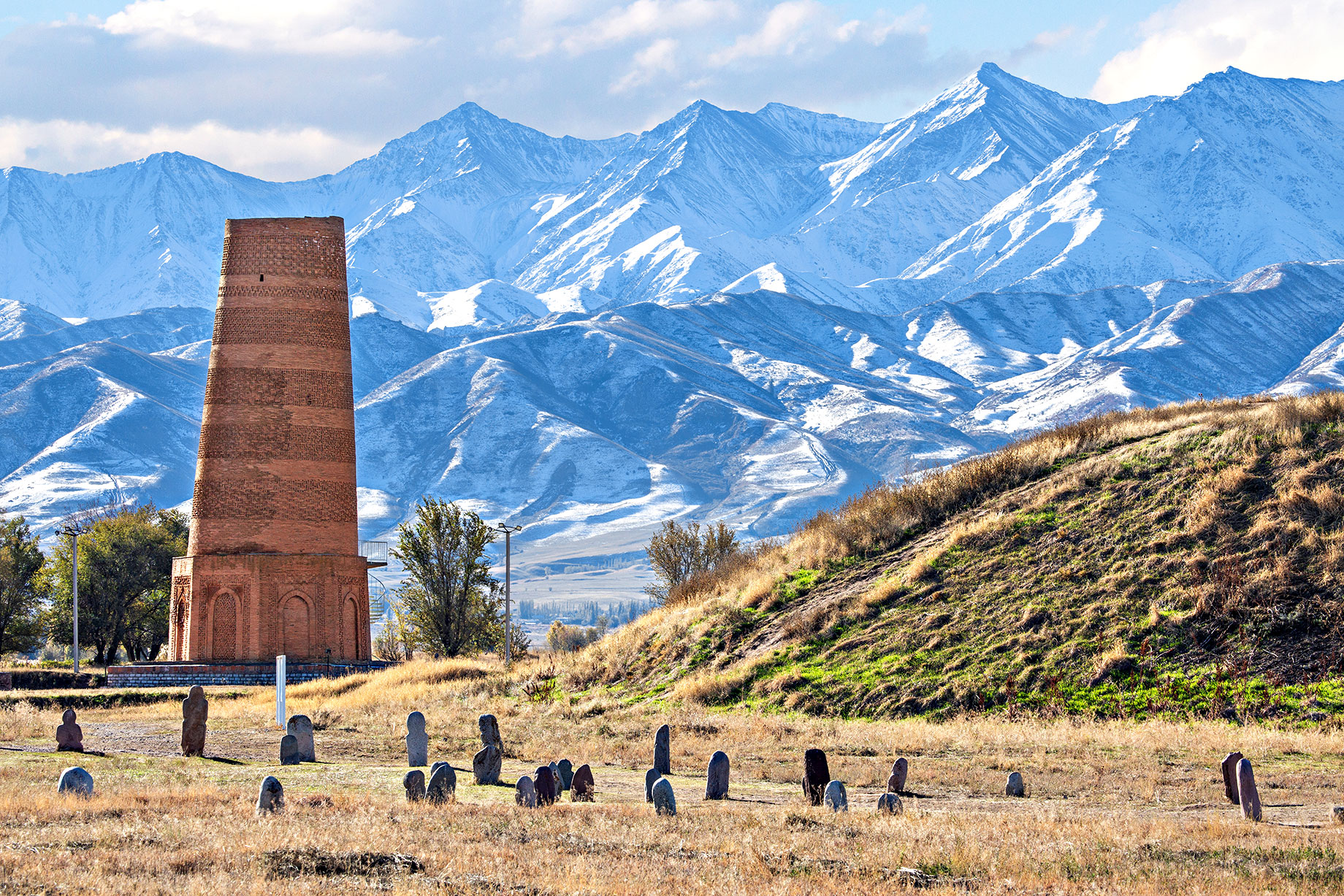
Just an hour’s drive from Bishkek, the Burana Tower is one of the most iconic Silk Road landmarks in Kyrgyzstan. This 11th-century minaret once stood in the thriving city of Balasagun, an important trading hub of the Karakhanid Empire.
Today, visitors can climb the narrow staircase to the top for panoramic views of the Chüy Valley. Surrounding the tower are balbals, mysterious stone warrior statues, and a small museum displaying artifacts from the region’s rich past.
Most tours in Kyrgyzstan include a stop at Burana, making it a perfect first glimpse into the country’s Silk Road heritage.
2. Tash Rabat Caravanserai: The Stone Fortress of Traders
Hidden in a remote valley near the Torugart Pass, Tash Rabat is one of the best-preserved caravanserais in all of Central Asia. Built in the 15th century, this stone fortress once sheltered merchants, travelers, and even monks journeying along the Silk Road between China and the Middle East.
Surrounded by snow-capped peaks and grazing yaks, Tash Rabat’s setting is spectacular. The silence of the mountains, broken only by the sound of the wind, makes it an unforgettable stop for those seeking both history and solitude.
Many travelers choose to stay overnight in nearby yurt camps, combining cultural immersion with breathtaking mountain scenery.
3. Osh: The Southern Gateway of the Silk Road
Known as one of the oldest cities in Central Asia, Osh is over 3,000 years old and has long been a vibrant Silk Road trading center. The city’s bustling Jayma Bazaar still captures the energy of those ancient markets, where goods from India, China, and Persia once exchanged hands.
Don’t miss the Suleiman-Too Sacred Mountain, a UNESCO World Heritage site that has been a place of pilgrimage for millennia. Climb to the top for panoramic views of the city and the fertile Fergana Valley below.
From Osh, you can continue along the southern Silk Road route toward Uzbekistan or Kazakhstan, making it a must-visit stop on any overland itinerary.
4. Uzgen: The Forgotten Minarets of the Karakhanids
Located just an hour from Osh, Uzgen was once the capital of the Karakhanid dynasty and a major Silk Road stop. The Uzgen Minaret and its three beautifully decorated mausoleums are among the finest examples of medieval Islamic architecture in the region.
The intricate brick patterns and turquoise tiles reflect the artistic sophistication that flourished along the Silk Road. A stroll through Uzgen’s old quarter reveals centuries of layered history and warm hospitality from local families.
5. Sary-Chelek and Arslanbob: Nature Meets History
While the Silk Road is often associated with cities and caravanserais, many of its routes crossed through mountain valleys and forests – the same landscapes that today make Kyrgyzstan a paradise for eco-tourism.
The Arslanbob walnut forest, believed to be one of the world’s oldest and largest, supplied nuts that were once traded across the Silk Road. The nearby Sary-Chelek Biosphere Reserve offers turquoise lakes and alpine trails perfect for couples or photographers seeking tranquility.
These natural wonders provide a glimpse into the landscapes that ancient travelers marveled at centuries ago.
6. Kochkor and the Felt-Making Villages
The village of Kochkor, located between Bishkek and Issyk-Kul, is a cultural highlight for travelers exploring the Silk Road route. Here, local artisans continue the age-old tradition of felt-making, producing colorful shyrdaks (felt carpets) and souvenirs using methods passed down through generations.
Participating in a felt-making workshop not only supports local communities but also connects visitors with the living heritage of the Silk Road, where culture and trade intertwined.
7. Karakol: Gateway to the Eastern Silk Road
Nestled at the eastern edge of Lake Issyk-Kul, Karakol is a charming town rich in history and architecture. Once a strategic stop for Russian explorers and Silk Road traders, today it’s a base for both cultural and adventure tours.
Visit the Dungan Mosque, built entirely of wood without a single nail, and the Russian Orthodox Church, before exploring the local food scene featuring traditional Ashlyan-Fu noodles. Karakol perfectly blends Kyrgyz, Dungan, and Russian influences – a true reflection of Silk Road diversity.
Traveling the Silk Road Today
Exploring Kyrgyzstan’s Silk Road sites is easy and rewarding with private car-and-driver services or guided tours in Kyrgyzstan. Most routes begin in Bishkek and continue toward Issyk-Kul, Naryn, and Osh: tracing the same paths that caravans once took centuries ago.
The best time to travel is from May to October, when mountain passes are open and the weather is ideal for sightseeing and photography.
Why Kyrgyzstan is the Perfect Silk Road Destination?
- Authentic experiences: Fewer crowds and untouched heritage sites
- Affordable travel: Great value for accommodation, transport, and local guides
- Friendly people: Genuine hospitality that makes visitors feel like family
- Stunning landscapes: Every road trip feels like a journey through time
Final Thoughts
Kyrgyzstan offers a rare chance to relive the magic of the Silk Road – not through museums, but in real, living landscapes. From ancient caravanserais to mountain lakes and vibrant bazaars, every stop tells a story of connection and culture.
If you’re dreaming of a journey filled with history, nature, and authenticity, there’s no better way to experience it than through expertly organized tours in Kyrgyzstan, where every turn of the road reveals a new chapter of the world’s most legendary trade route.