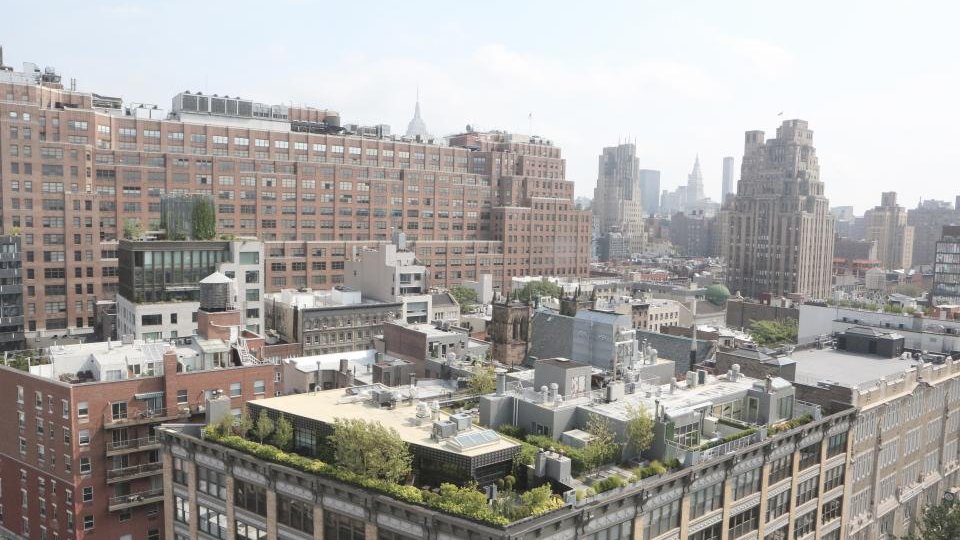
Group trips to New York tend to fail in the same place: the evenings. Days are easy to fill with museums, Central Park and a walk across the Brooklyn Bridge. Evenings are where 30 people, three time zones of preferences and a fixed budget collide with the city’s most popular rooftops, which rarely hold a table for a group that size.
This case study follows a composite team trip, the kind a mid-size company runs every spring, and shows how the planner worked through New York rooftops one evening at a time. The trip ended with a private dinner at a New York event space with a private rooftop in NoHo, but the four evenings before it are where most of the lessons came from.
Set the brief before choosing a single rooftop
What was the group? Thirty employees, mostly in their late twenties and thirties, flying in for five nights in June. A fixed per-person budget for evenings. The last evening reserved for a company dinner with speeches.
What did they want? The planner ran a short survey. Views of the Manhattan skyline came first, then good food and drinks, then the chance to see more than one neighborhood. Nobody asked for a nightclub.
What constrained the plan? Three things. Most rooftop bars in New York City take walk-ins and small reservations, not 30 people at once. Weather can close an outdoor terrace with an hour’s notice. And the best rooftop bars fill early on Thursdays and Fridays, well before sunset, which in late June arrives around 8:30 pm.
The brief that came out of this was simple: one rooftop per evening, a different neighborhood each time, and a rain plan for every booking.
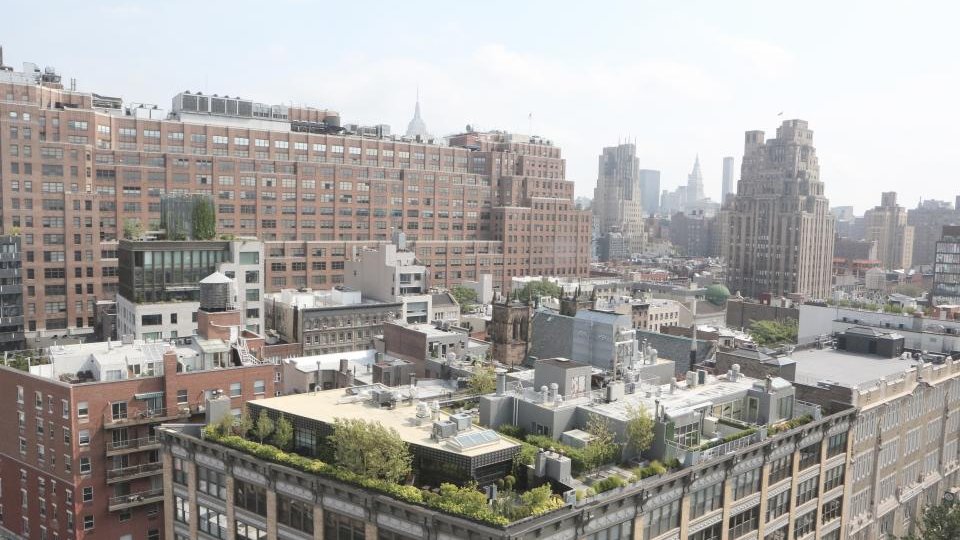
Match each evening to a type of rooftop
Rooftop venues in the city fall into four broad groups, and each one solves a different problem for a group trip.
Day one: an observation deck
Why start here? Arrival day is long, people land at different times, and nobody wants a reservation they might miss. An observation deck with timed tickets solves that.
The options are well known. Top of the Rock at Rockefeller Center gives the classic view south toward the Empire State Building and north over Central Park. Summit One Vanderbilt sits next to Grand Central. Edge at Hudson Yards has an outdoor sky deck about 100 floors up. The planner bought flexible tickets for a sunset slot at one of them, then let the group find food nearby on their own.
The business logic: low cost per head, no minimum spend, no risk of a no-show penalty.
Day two: a hotel rooftop bar in Midtown
How do you get 30 people into a busy rooftop bar? You split them, or you pay for a section.
Rooftop hotel bars around Times Square, such as Magic Hour Rooftop Bar and Lounge at the Moxy, are built for volume. Many offer semi-private areas for groups with a food and beverage minimum. For the case study group, a reserved section with indoor and outdoor seating cost less than three separate restaurant reservations would have, and it kept the team together on the second night, when people were still getting to know colleagues from other offices.
The lesson the planner wrote down afterward: ask whether the section has indoor seating. A rooftop lounge with a covered or enclosed area keeps the booking alive if a storm rolls in at 7 pm.
Day three: Brooklyn
Was it worth crossing the river? Yes, for the views alone. Looking back at Manhattan from Williamsburg gives the full skyline in one frame, which no Manhattan rooftop can do.
Westlight, on the 22nd floor of The William Vale, is the best-known rooftop bar in the area. The planner chose a smaller group format here: four reservations of six to eight people at staggered times, with everyone meeting afterward at a bar at street level. It added logistics. It also meant nobody stood in a line for an hour.
Day four: rooftop restaurants downtown
For the last free evening, the planner moved to rooftop restaurants. Food mattered more by day four, and a seated dinner on a terrace in SoHo or the Lower East Side felt different from the previous evenings. Several downtown rooftop restaurants take group bookings early in the week when they would refuse them on a Friday.
What did this cost compared with a bar? More per person, since dinner replaced drinks and snacks, but less total than people buying dinner separately before heading out. Planning food and drinks as one line item kept the evening budget predictable.
Map the best New York rooftops by neighborhood
Most rooftop guides list bars by fame, and the NYC rooftop guide format rarely changes. A group planner gets more out of a map, because the real constraint is how far 30 people will travel after dinner. The case study team kept a shared map of the city’s rooftop bars grouped by area, with a note on seating, menu, dining hours and whether each one let you book a group on its website. That map became the team’s guide for the week.
Midtown and Times Square. The highest density of hotel rooftop bars in the city, close to Broadway theaters. Good for a drink before or after a show. Views of the Empire State Building and the lights of Times Square are the main draw, and most spots have indoor seating for colder months.
NoMad and Flatiron. 230 Fifth is the best-known rooftop here, a large space with direct views of the Empire State Building. Several rooftops in the area also serve weekend brunch, which suited the team’s one late morning.
Lower East Side and SoHo. Smaller rooftop bars, more cocktails than lounges, and a younger crowd. Hotel roof decks in this part of Manhattan often look west toward the downtown skyline and the Hudson.
Williamsburg, Brooklyn. The best views of Manhattan, especially at sunset, and rooftop bars that feel less formal than Midtown. Plan the trip back across the river before booking.
The map also flagged which rooftops serve full dining and which only offer small plates. When people want to eat a real meal and see the skyline at the same visit, rooftop restaurants are the safer option, while a bar works better after dinner somewhere else. That single note saved the group from a hungry evening on day two, when the original rooftop choice turned out to serve only snacks.
For travelers planning on their own, the same logic applies at a smaller scale. Pick the neighborhood first, use a map to find two rooftops within a short walk of each other, and keep one with an indoor area as the backup. In October and early November, the outdoor season is short and the city is still warm enough for an hour on a terrace, which makes fall one of the best times to visit New York rooftops without the summer crowds. A good experience depends far more on timing than on which famous name you pick.
Book the company dinner as a private event
Day five was the company dinner, with speeches, a short awards segment and a photographer. None of the public rooftop venues could host that. Speeches need a sound system, guests need to hear them, and the room needs to belong to the group for the evening.
The planner looked for a private venue with its own rooftop instead. The criteria were concrete: a full indoor floor for dinner and speeches, a rooftop for cocktails before and after, and in-house partners for catering and AV so the team was not coordinating five vendors from out of town.
Why not a hotel ballroom? The group had spent four evenings looking at the city from above. A windowless ballroom would have felt like a step down on the evening that mattered most to leadership. A loft building with a rooftop kept the same feeling as the earlier evenings while giving the privacy and control a corporate event needs.
Use the numbers to plan the next trip
After the trip, the planner compared costs and feedback for each evening. Three findings held up.
Observation decks deliver the most per dollar. They had the lowest cost per head and the highest share of photos posted by the team. They are not a social evening, though, so they work best on arrival day.
Group sections beat walk-ins at popular bars. The minimum spend looked high on paper. Divided by 30, it was close to what people would have spent anyway, and the group did not lose an hour waiting for space.
The company dinner drove the feedback. In the post-trip survey, the company dinner was named the highlight far more often than any public rooftop. Owning the space, the sound and the timing changed how people remembered the whole trip.
Plan around the weather and the calendar
New York rooftops follow the seasons. Late spring, September and October are the most comfortable months, while July and August evenings can stay hot and humid well after dark. In winter, many rooftop bars switch to enclosed spaces, heated igloos or glass-walled lounges, and some close entirely.
How early should a group book? For a section at a busy rooftop bar in June, the planner started six to eight weeks out. For the company dinner, three months ahead was barely enough to get a Thursday. Fridays and Saturdays from May to October go first.
Every booking in the case study had a written rain plan: an indoor area at the same venue, or a named backup within walking distance. On the one evening it rained, the switch took ten minutes because everyone already knew where to go.
Handle the evening itself
On the night, small decisions shape the experience more than the venue. The planner in the case study sent a one-page note to the group each afternoon with the address, the nearest subway, what the menu offered, and whether people should eat first.
Arrive early. The top rooftop bars in NYC fill an hour before sunset, especially on a Friday night. Arriving at 6:30 pm on a June evening usually means a seat; arriving at 8 pm can mean a line around the block.
Order food early, too. Rooftop kitchens get slow once the terrace is full. A group that orders a round of plates when it arrives eats well. A group that waits until 9 pm often gets a shortened menu.
Know the indoor option. Before you order, ask the staff where the group goes if it rains, and whether the inside lounge stays open to the same party. Some rooftop restaurants move guests to a dining room downstairs, others simply close the terrace.
Plan the photos. The best light for photos on a rooftop is the half hour around sunset. Anyone who wants a perfect shot of the skyline should be at the railing then, not at the bar ordering cocktails.
For a free evening, a simple rule worked well: pick restaurants for dinner first, then find a rooftop bar on the same block or one block over. It kept the party together, kept everyone within a few blocks of the restaurant, and avoided taxis across Manhattan at 10 pm. On the last morning, a few people went back to Central Park for a final walk and a late brunch, which is a good way to close any trip to the city.
Check these details before you confirm
- Age policy. New York’s drinking age is 21, and some rooftop bars apply it to everyone in the group after a set hour.
- Dress code. Hotel lounges in Midtown are often stricter than Brooklyn spots.
- What the minimum covers. Tax and service charges are usually added on top.
- Indoor backup space at the same address.
- Food options. Some rooftop bars serve only small plates, so a group may need dinner first.
Travel guides tend to rank them by view or by cocktail list. For a group, the better question is which rooftop fits which day of the trip. Arrival day, a team outing, a free evening and a company dinner each call for a different kind of space, and planning them that way keeps a 30-person trip from turning into a series of long lines.