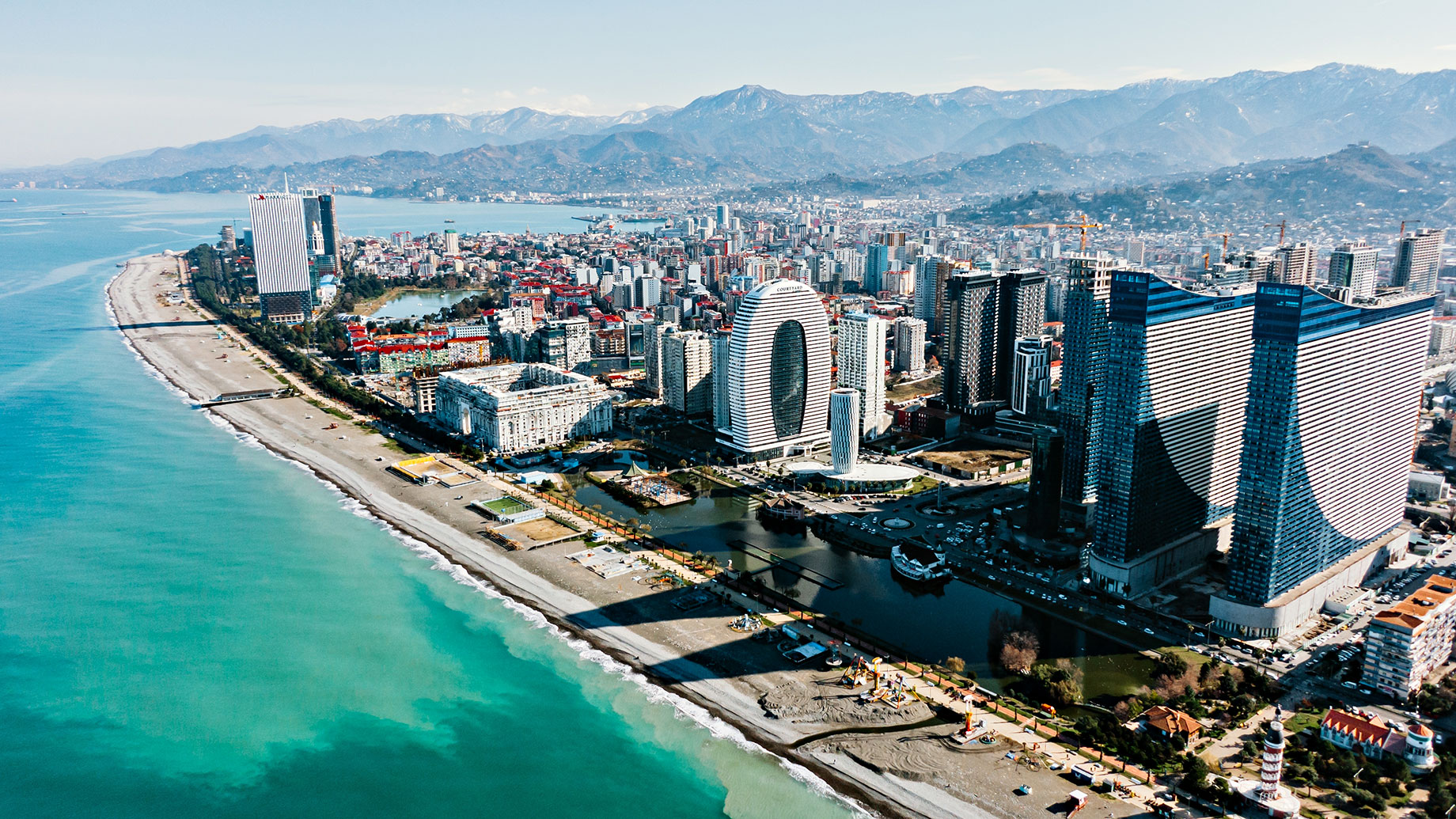
Batumi’s palm-lined boulevard, contemporary skyline, and subtropical climate have made this Black Sea city one of Eastern Europe’s most surprising (and accessible) escapes. For travelers and long-stayers alike, public transportation in Batumi is simple, cheap, and well-connected to the rest of Georgia—one reason the city keeps climbing shortlists for affordable seaside bases.
Getting around Batumi (and beyond) is refreshingly simple
City buses cover most of the core and suburban areas with numbered routes and regular service. Minibuses (marshrutkas) fill in gaps and provide flexible, frequent service along many corridors.
You can use a Batumi transport card or contactless bank cards for bus rides. The fare is modest — many urban bus rides cost roughly 0.30 GEL, while marshrutka fares vary slightly depending on distance.
From the airport, Bus #10 connects you to the city center in about 20–30 minutes. Taxis via apps like Bolt are easy alternatives.
For longer trips—say, to neighboring beach towns or inland—regional buses and intercity coaches operate frequently. Trains also run between Batumi and Tbilisi (about 5 hours) on modern express stock.
Why Batumi stands out among emerging Eastern European destinations
Georgia in general, and Batumi in particular, offer strong value for money. The cost of living—including rent, food, utilities, and transit—tends to be significantly lower than in most EU capitals or Western European cities.
Because transit fares remain very low, moving around the city costs almost nothing relative to many places. That leaves more budget for experiences, leisure, or just living comfortably.
When comparing emerging destinations in Eastern Europe, many long-stay travelers and digital nomads highlight Batumi’s mix of seaside climate, mountain access, affordability, and convenience. For a practical look at on-the-ground mobility, see this overview of public transportation in Batumi.
Arrival & Connectivity: From the airport, rails, and roads
Batumi International Airport lies about 7 km from the city center and is well integrated by bus. Bus #10 links the terminal to urban routes affordably.
The Batumi Central railway station connects the city with Tbilisi and other major Georgian destinations in around 5 hours.
Georgia’s road network also supports coastal travel, with a highway linking Batumi to nearby towns and the Turkish border. Ferries from Batumi also connect to regional ports, restoring Black Sea maritime links.
Tips for long stays: Visas, cards, apps
One huge advantage for long stays is Georgia’s generous visa policy: citizens of many countries can stay visa-free for up to 365 days.
To ride buses easily, get the Batumi transport card, available at kiosks and top-up terminals around the city.
Apps like Moovit can help with trip planning, while ride-hailing apps such as Bolt are widely used for convenience.
Things to watch & recommendations
- Public transit generally runs from early morning until late evening.
- Marshrutkas can be crowded during rush hours.
- Roads outside central neighborhoods may be less well maintained.
- Cycling is viable in some areas—especially along the seafront promenade.
- For a scenic day trip, head to the Batumi Botanical Garden, just 9 km north of the center.
Conclusion
Batumi strikes a rare balance: seaside living, year-round mild weather, access to Georgia’s interior, and an everyday transport system that costs just pennies. Whether you’re there for a week or a year, the infrastructure supports flexibility, affordability, and ease.
If Batumi (or Georgia more broadly) is on your radar, start planning with this detailed primer on public transportation in Batumi—part of a wider resource that’s useful when comparing neighborhoods, costs, and logistics for moving to Georgia.