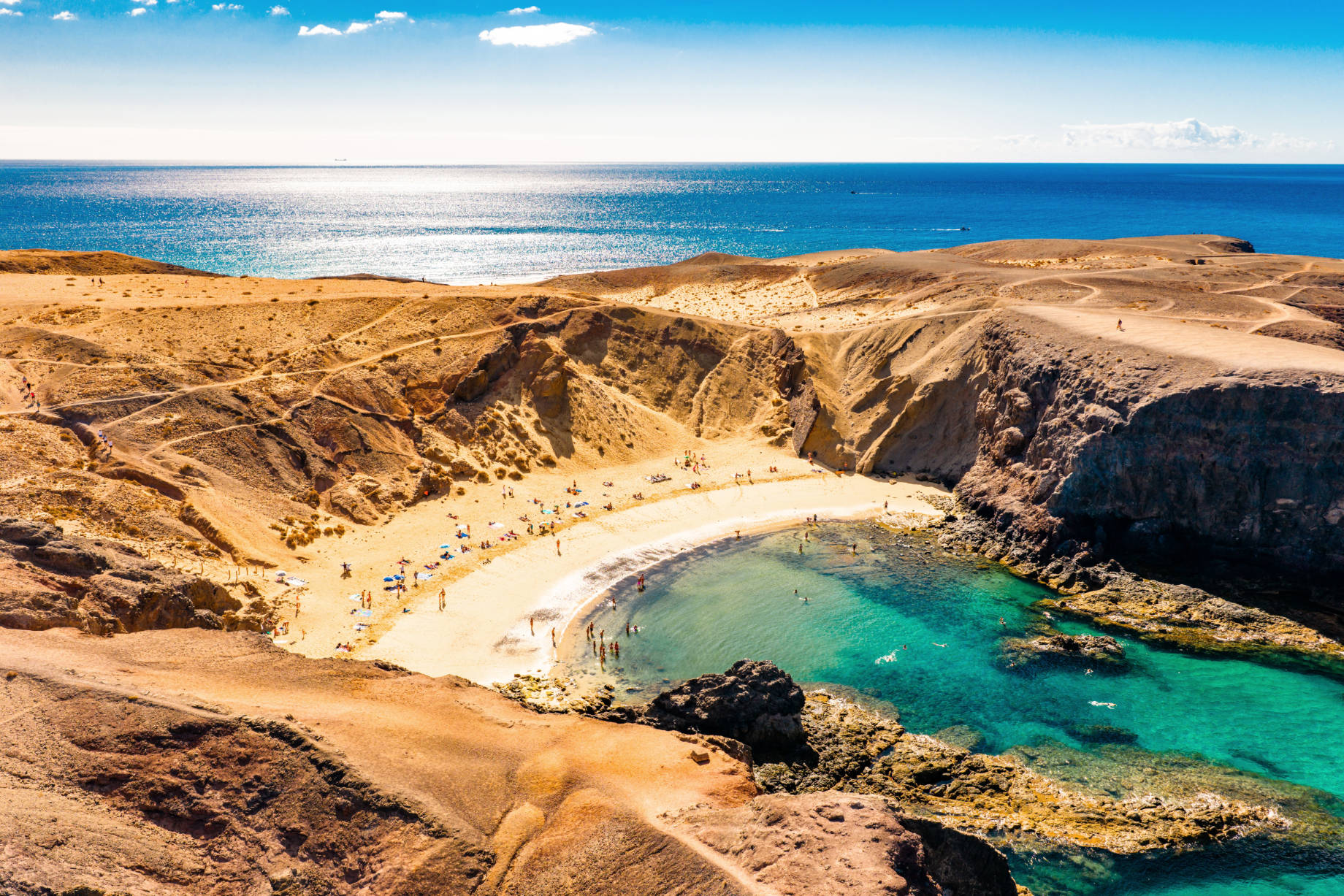
Lanzarote is one of the most distinctive islands in the Canaries, offering a landscape shaped by volcanoes, wind, sea, and sunlight. It is a destination where black lava fields sit close to golden beaches, whitewashed villages, coastal promenades, vineyards, caves, and dramatic viewpoints.
For travellers visiting for the first time, Lanzarote is easy to enjoy but worth planning properly. The island is compact, but its best experiences are spread across several areas. Timanfaya National Park, Jameos del Agua, Cueva de los Verdes, La Geria, Playa Blanca, Puerto del Carmen, Costa Teguise, and the northern viewpoints all offer different sides of the island.
This guide covers the best places to visit, what to expect from the weather, and how to get around Lanzarote after arrival.
Why Visit Lanzarote?
Lanzarote is more than a beach destination. Its volcanic landscape gives it a character that feels very different from many other European island escapes. The island has dry terrain, low-rise towns, open coastal roads, and striking natural colours, from red and black volcanic soil to bright Atlantic blue.
The island also has a strong cultural identity connected to César Manrique, the Lanzarote-born artist and architect whose work helped shape several of the island’s most famous attractions. Jameos del Agua, for example, is one of the best-known examples of how Lanzarote combines natural volcanic formations with art, architecture, and tourism.
Lanzarote works well for many types of trips. Couples can enjoy quiet coastal stays, families can base themselves near beaches and resort facilities, and active travellers can explore caves, viewpoints, walking routes, cycling roads, and volcanic scenery.
Best Places to Visit in Lanzarote
Timanfaya National Park
Timanfaya National Park is one of Lanzarote’s essential attractions. Its Fire Mountains were formed by volcanic eruptions in the eighteenth and nineteenth centuries, creating red craters, lava flows, and lunar-style landscapes that remain among the island’s most memorable sights.
Visitors usually experience Timanfaya through a controlled route, which helps protect the volcanic terrain while still allowing travellers to see the scale of the landscape. It is a good idea to arrive early or book ahead where possible, especially during busier travel periods.
Jameos del Agua
Jameos del Agua is one of Lanzarote’s most atmospheric places to visit. It is built into a volcanic formation and combines cave spaces, water, architecture, gardens, and cultural design. The result is not simply a natural attraction, but a carefully designed experience that reflects the island’s relationship with its volcanic environment.
This is a strong choice for travellers who want to understand Lanzarote beyond its beaches. It pairs well with a visit to Cueva de los Verdes, since both are located in the north and are connected to the island’s volcanic geology.
Cueva de los Verdes
Cueva de los Verdes is one of Lanzarote’s most impressive underground attractions. The tunnel formed by La Corona Volcano is described by Lanzarote Tourism as one of the longest and most interesting volcanic tunnels on the planet.
The cave is visited by guided tour, making it accessible even for travellers who are not usually interested in geology. Its lighting, narrow passages, and underground spaces create a very different experience from the beaches and open volcanic plains above ground.
Mirador del Río
Mirador del Río is one of Lanzarote’s best viewpoints. Located in the north of the island, it offers wide views across the water toward La Graciosa. The site is also associated with César Manrique’s design approach, blending architecture into the landscape rather than overwhelming it.
It is worth including Mirador del Río as part of a northern Lanzarote itinerary. Travellers can combine it with Jameos del Agua, Cueva de los Verdes, Haría, Punta Mujeres, and Arrieta.
La Geria
La Geria is Lanzarote’s wine region and one of its most unusual landscapes. Instead of the green vineyard scenes many travellers expect elsewhere in Europe, La Geria is defined by dark volcanic soil, low stone walls, and vines planted in protected hollows.
The area is especially interesting for travellers who enjoy food, wine, photography, and landscape. It also shows how local agriculture adapted to the island’s dry, volcanic conditions.
Playa Blanca, Puerto del Carmen, and Costa Teguise
Lanzarote’s main resort areas each have a different feel.
Playa Blanca, in the south, is popular for a calmer coastal stay, marina dining, villa accommodation, and access to the Papagayo beaches. Puerto del Carmen is more established and lively, with a long seafront, restaurants, bars, shops, and a wide range of accommodation. Costa Teguise is a practical choice for families, beach days, and access to the eastern and northern parts of the island.
Choosing the right base depends on the kind of trip you want. Travellers looking for convenience may prefer Puerto del Carmen or Costa Teguise. Those seeking a quieter stay may prefer Playa Blanca or a rural property inland.
Lanzarote Weather: What to Expect
Lanzarote has a warm climate throughout the year. The official tourism site notes an average annual temperature of about 21ºC, with scarce rainfall and sunshine for much of the year because of the island’s position as the easternmost Canary Island and the closest to the African continent.
This makes Lanzarote a strong year-round destination. Summer is best for beach-focused holidays, while spring, autumn, and winter can be excellent for sightseeing, walking, cycling, and exploring without intense heat.
Wind is also part of the island’s climate. Even on sunny days, exposed viewpoints and coastal areas can feel breezy. Travellers should pack light clothing, swimwear, sun protection, and at least one light layer for evenings or windy conditions.
How to Get Around Lanzarote
Most visitors arrive at César Manrique-Lanzarote Airport, which is located five kilometres from Arrecife. From there, travellers continue to resort areas such as Puerto del Carmen, Playa Blanca, Costa Teguise, or smaller towns and rural stays across the island.
For a smooth arrival, especially after a long flight or when travelling with luggage, families, or a late-night schedule, many visitors arrange Lanzarote airport transfers before they travel. This is particularly practical for visitors staying in villas, hotels outside the main centres, or areas where public transport is less direct.
Public buses are also available. AENA lists Line 161 as connecting the airport with Puerto del Carmen and Playa Blanca, while IntercityBus describes the route as serving the airport, Puerto del Carmen, Puerto Calero, Yaiza, and Playa Blanca.
Rental cars are useful for travellers who want to explore independently. Lanzarote’s main roads are generally straightforward, and driving gives more flexibility for visiting Timanfaya, La Geria, northern villages, beaches, and viewpoints. However, visitors who plan to stay mostly in one resort area may find that transfers, buses, taxis, and organised tours are enough.
Suggested Lanzarote Itinerary
For a short three-day visit, focus on the island’s highlights. Spend one day exploring Timanfaya and La Geria, one day visiting Jameos del Agua, Cueva de los Verdes, and Mirador del Río, and one day enjoying the beaches and resort areas around Playa Blanca, Puerto del Carmen, or Costa Teguise.
For a five- to seven-day trip, slow the pace. Add time for Papagayo beaches, the old capital of Teguise, coastal villages in the north, a wine stop in La Geria, and at least one relaxed beach day. Lanzarote is best enjoyed when the itinerary leaves space for unplanned stops, sea views, and long meals.
Practical Tips for Visiting Lanzarote
Book key attractions in advance where required or recommended, especially during peak travel periods. Plan northern attractions together to reduce driving time, and leave enough time for viewpoints, villages, and coastal stops.
Use sunscreen even when the wind makes the temperature feel mild. The island’s clear skies and open landscapes mean sun exposure can be strong. Comfortable shoes are also useful for volcanic sites, caves, viewpoints, and old town streets.
Think carefully about where to stay. Playa Blanca, Puerto del Carmen, and Costa Teguise are the most practical resort bases, while inland and northern stays offer a quieter experience but usually require more transport planning.
Respect protected landscapes. Lanzarote’s volcanic areas are fragile, and visitors should stay on marked routes, follow local guidance, and avoid removing stones or natural material.
Frequently Asked Questions About Lanzarote
Is Lanzarote good for a first visit to the Canary Islands?
Yes. Lanzarote is a good first Canary Islands destination because it combines beaches, resorts, volcanic attractions, cultural sites, villages, viewpoints, and reliable year-round weather.
Do you need a car in Lanzarote?
Not always. A car is useful for independent exploring, but visitors staying in main resort areas can use airport transfers, buses, taxis, and guided tours.
What is the best area to stay in Lanzarote?
Playa Blanca is good for a quieter coastal holiday, Puerto del Carmen is best for convenience and nightlife, and Costa Teguise is practical for families and beach-focused stays. Rural areas suit travellers who want peace and scenery.
Final Thoughts
Lanzarote is one of the Canary Islands’ most rewarding destinations because it offers more than sun and sea. Its volcanic landscapes, artistic heritage, caves, vineyards, beaches, and coastal towns create a trip with real variety.
With a clear plan, visitors can move smoothly from airport arrival to beachside relaxation, then explore the island’s national park, northern caves, wine region, viewpoints, and villages. Whether visiting for a short break or a longer holiday, Lanzarote is a destination that rewards curiosity, flexibility, and time spent beyond the resort.