You land in Hanoi, see Nike and Zara made down the road, and assume everything’s cheap here. Some of it is. Most of it isn’t. Here’s what actually pays off.
The “Made Here, So It’s Cheaper” Myth
The logic feels airtight on the plane. Vietnam stitches half the world’s sneakers and many of its phones. Buying that stuff on home turf should be a steal.
On the ground, it falls apart fast. Most factories here work on contract for foreign brands. They ship the goods straight out.
When products return to a Vietnamese shelf, they pick up costs. Import duty often runs 10–30%, plus VAT and the brand’s markup.
A Samsung phone is assembled 30 km from a Hanoi mall. It can cost more there than in Singapore or Dubai.
Uniqlo ran over 50 factories here for a decade. It opened its first Vietnamese store only in 2019. The clothes were made in Binh Duong and sold in Tokyo.
So skip the airport-fantasy shopping list. The real bargains sit somewhere else.
Where You Actually Save Money
After three trips, the savings cluster into a few categories. Everything else is a coin flip.
| What to Buy | Where | Typical Discount | The Catch |
|---|---|---|---|
| Factory overstock, including Nike, Adidas, and Uniqlo surplus | “Hàng Việt Nam Chất Lượng Cao” outlets in Ho Chi Minh City and Hanoi | 30–60% off retail | Sizes and colours are pot luck |
| Custom tailoring, including suits and áo dài | Hoi An | A suit for the price of a Western shirt | Quality swings significantly by shop |
| Domestic coffee, tea, and dairy | Supermarkets and local markets | Genuinely inexpensive at the source | Bulky to carry home |
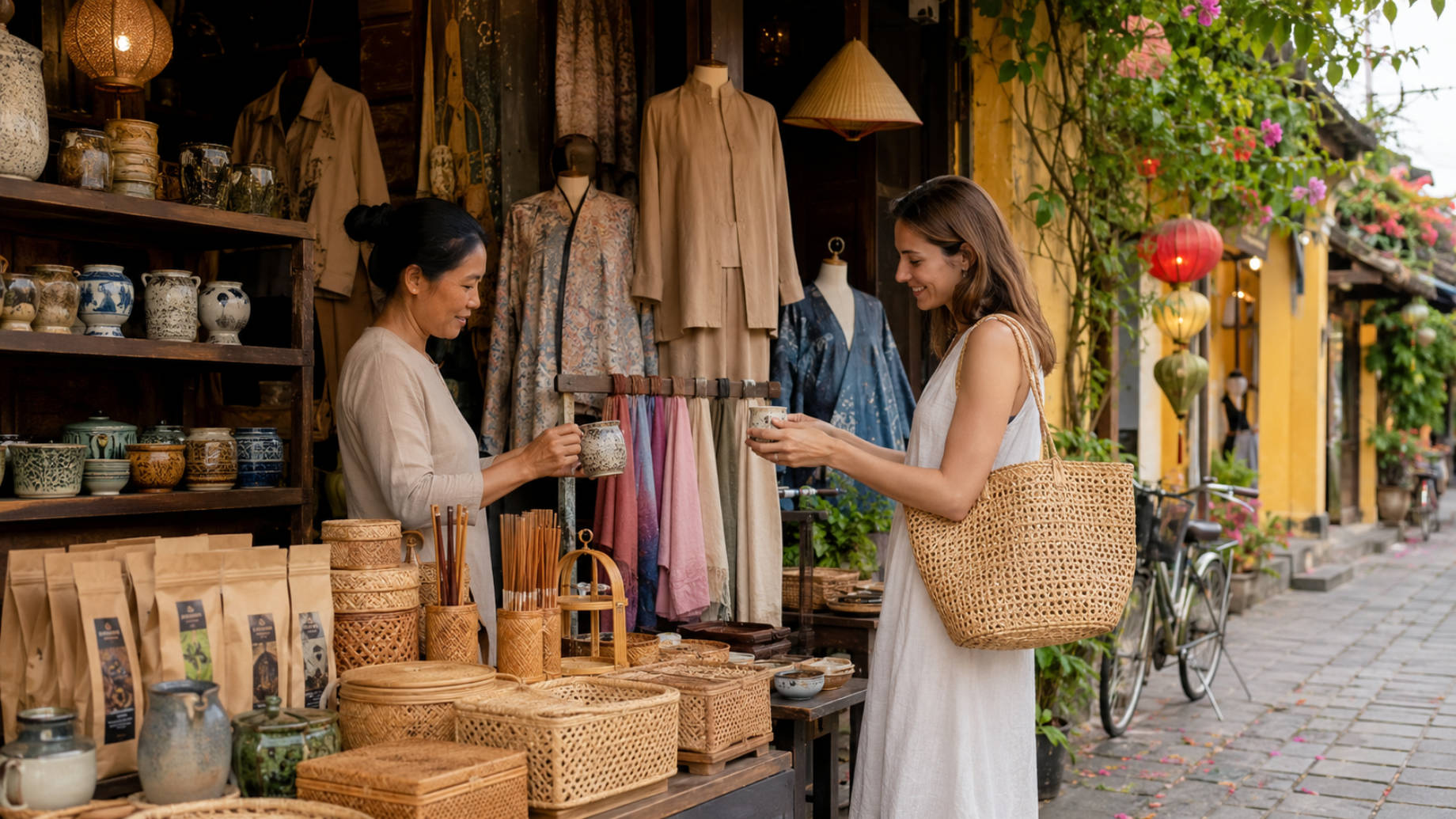
| Handicrafts, including lacquerware, rattan, and ceramics | Bat Trang and other craft villages | Source prices with no middleman | Fragile and difficult to pack |
| Branded “deals” | Saigon Square and Ben Thanh Market | Approximately 90% off | Usually counterfeit and potentially subject to customs seizure |
The overstock outlets are the underrated option. These shops sell genuine surplus and seconds from export lines.
Vietnam makes about half of Nike’s global footwear. It also makes roughly 40% of Adidas’s, mostly in Dong Nai. That surplus has to land somewhere.
Most of these outlets sit in central districts of Ho Chi Minh City and Hanoi. A short taxi ride beats the tourist boutiques on price.
Look for the “Hàng Việt Nam Chất Lượng Cao” sticker. It means “high-quality Vietnamese goods” and flags the real shops.
You dig for the size that survived. But a real pair of shoes at 40% off stays a real pair.
Check the stitching and soles before you pay. Seconds sometimes carry small flaws from the production line.
A Sourcing Expert’s Read on the “Made in Vietnam” Label
I asked someone who buys here for a living.
“Travellers ask me this every week,” says Danh Truong. He is a sourcing specialist at Primo Sourcing in Ho Chi Minh City.
“The label tells you where the last step happened,” he says. “It doesn’t tell you where the product was built.”
“Electronics are mostly assembled from Chinese components,” he adds. “So you save nothing buying them locally.”
His test is blunt: does Vietnam make the whole thing? Furniture, footwear, garments, ceramics, and bamboo are start-to-finish Vietnamese work. Phones and laptops are screwdriver jobs using imported parts.
Vietnam still imports most electronics components from China. The local factories handle assembly, not the parts themselves.
He keeps a category-by-category breakdown of what’s genuinely made in Vietnam for his importer clients. The same map works for a tourist.
If your souvenir sits in his first group, the price reflects real local work. If not, you’re paying to re-import something that already left.
That single test kills most bad purchases early.
The Market Trap
Saigon Square and Ben Thanh are on every itinerary. Both are wall-to-wall counterfeits.
The North Face jackets and “Gucci” wallets are copies. Quality runs from passable to embarrassing. AirPods sell at a tenth of the real price.
Vendors expect you to haggle down to about 40% of the opening number. That’s half the fun if you know what you’re holding.
The trouble starts at the other end. Customs in the EU, US, UK, and Australia seize counterfeit goods on entry. The fakes get destroyed whether you knew or not.
A €15 “Rolex” is a cheap story to tell. A suitcase of them can mean a fine.
Small souvenirs are the safe play at these stalls. Think magnets, chopsticks, dried fruit, and conical hats.
Treat these markets as theatre and snacks. Buy a conical hat and some dried mango, then move on.
Hoi An Tailoring: The One Buy That Reliably Pays Off
Make room for a single real purchase, and make it this. Hoi An built its whole economy on tailoring.
Good shops turn a suit or áo dài around in 24–48 hours. The price is a fraction of European tailoring.
Leather shoes and bags are made to order too. Many shops will copy a photo of a design you bring in.
The country runs on this textile skill. Garments are a $44 billion export sector employing 2.7 million people.
The honest caveat: quality is uneven. Tourist-strip shops rush cheap fabric through junior tailors. You get what you pay for.
Read recent reviews before you commit. Ask to see the actual cloth, not a swatch book. Book your fitting on day one for time to adjust.
Expect to pay a deposit of around half upfront. Pay the rest at the final fitting, once it fits.
Done right, a wool suit costs around $150. It outlasts the trip by a decade.
Coffee, Ceramics, and the Things Worth the Suitcase Space
Vietnam is the world’s number-one Robusta exporter. Brands like Trung Nguyên and G7 are cheap in any supermarket.
A kilo of coffee costs less than a single café cup at home. It survives the journey and reminds you of the trip.
Buy whole beans or ground coffee for the real thing. The G7 instant sachets travel well as cheap gifts.
Skip the “weasel coffee” tourist pitch. Most of it is mislabelled and overpriced.
Bat Trang village near Hanoi has fired pottery for six centuries. It sells direct, at a fraction of Old Quarter boutique prices.
You can watch pieces being thrown before you buy. The same source logic applies to rattan and lacquerware.
Most Bat Trang sellers can arrange shipping for big orders. It costs more, but beats a cracked vase in your bag.
Bamboo deserves a second look for useful souvenirs. Vietnam is the world’s number-two bamboo exporter. Straws or kitchenware pack flat and weigh nothing.
Your luggage allowance is the only real enemy here. Pack fragile pieces carefully or have big items shipped.
What to Skip Outright
Electronics offer no savings, full stop. Treat “luxury” anything as fake until proven otherwise. The markup erases the point anyway.
Cosmetics and skincare are another trap. Imported brands cost more here than at a European pharmacy.
Skip branded goods at full mall retail too. You pay the re-import premium, so wait for home sales.