Since 2022, the team at Meliá Chiang Mai has planted more than 6,600 native trees through its Go Green programme, restoring more than 7 acres of seasonally dry forest in Doi Suthep-Pui National Park. The thirteenth planting took place on 26 June 2026, when about 180 staff put 800 saplings into 2 rai of ground in the Mae Taeng and Mae Rim areas, both north of the city.
Four more measures show up during the stay itself: a partner farm that supplies the kitchens, two restaurants with Green Kitchen certificates, a children’s crafts programme and the certifications listed on the hotel’s own page.
How Many Trees Has the Hotel Planted?
Each planting is run with the Doi Suthep Nature Center, a partnership that dates from 2022, the year the hotel opened in April, so the forest work is as old as the building. The species are chosen for the site: Quercus semiserrata, Castanopsis diversifolia, Ficus capillipes and Antidesma bunius, all native to northern Thailand’s dry forest.
In plain terms that is oak, a chestnut relative, a fig and a fruit tree, a mix that gives the slope canopy and food for wildlife. That is roughly three plantings a year since 2022, averaging about 500 saplings each, and the June 2026 one works out at 400 trees to the rai. Doi Suthep-Pui National Park holds more than 300 bird species and nearly 2,000 species of ferns and flowering plants, which is what the replanting is meant to protect.
The park sits within a short drive of the Old City, and the highland national park is one of the things to do in Chiang Mai a visitor can see first-hand: the temple on the ridge, Wat Phra That Doi Suthep, sits about 34 minutes away by road (19.9 km). The hotel’s part is slower work: a canopy that grows a few hundred saplings at a time.
Planting on 26 June puts the saplings in the ground at the start of the rainy season, which gives them months of steady rain to establish roots before the dry months return in November.
Where the Kitchen Gets Its Food
The hotel’s 360-degree cuisine programme is built on short supply lines. Ingredients are local, seasonal and chemical-free, and the kitchen works directly with farmers, university students and community groups. Its partner organic farm, Hug Rong Khum Farm, an organic gourmet farm in San Pa Tong district south of the city, supplies produce, and food waste goes back to the farm as compost, which closes the loop between plate and soil. The programme’s stated aim is to use every usable part of an ingredient.
Seed and Rong Khum also work as university partner farms where students train, so the programme feeds a teaching role as well as the restaurants. Local sourcing of this kind shortens the route from field to table, and the menu at Mai Restaurant & Bar points the same way: the grilled Angus rib eye is served with San Pa Tong rice, named for the district where the partner farm sits.
Green Kitchen Certificates
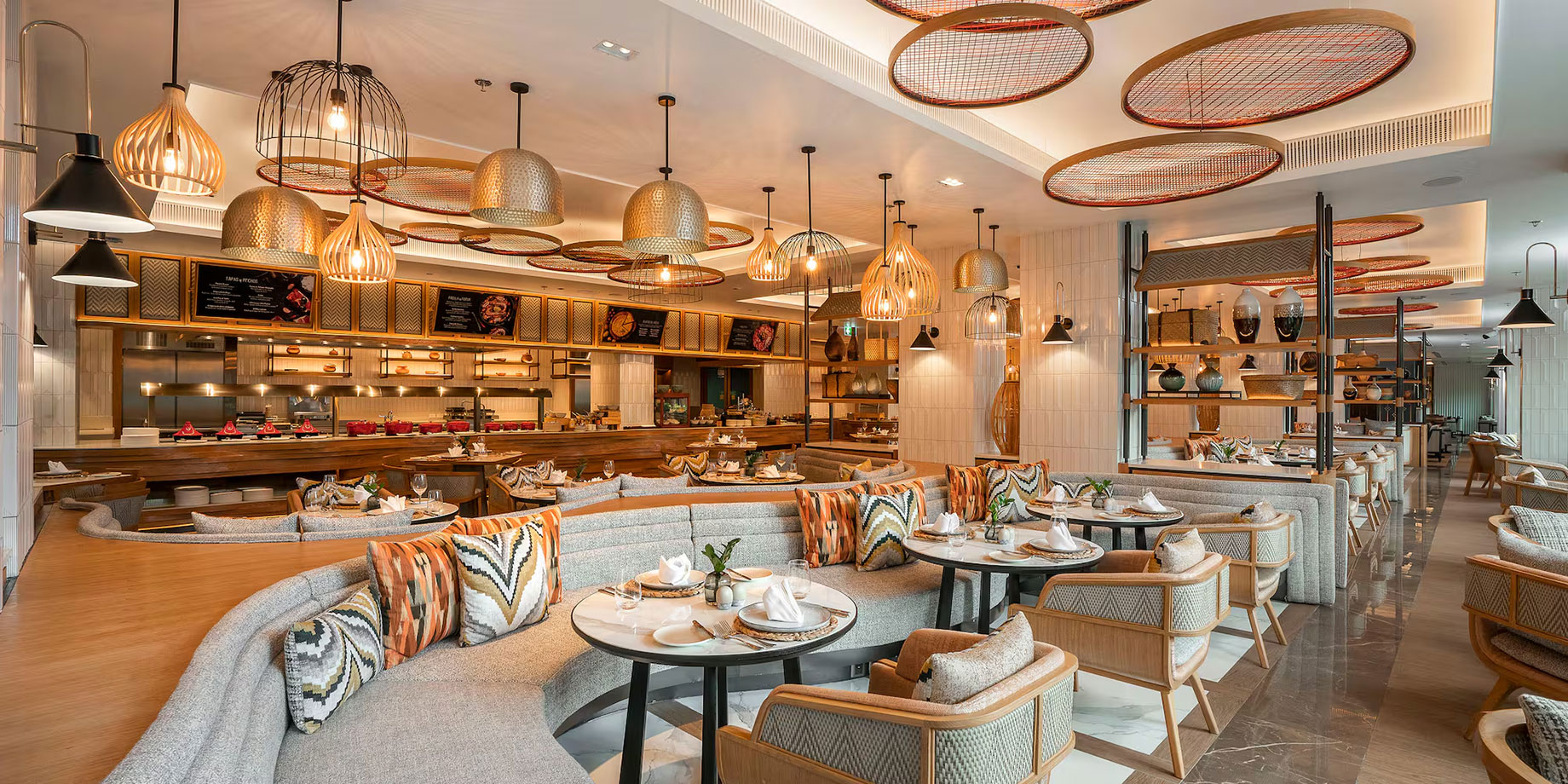
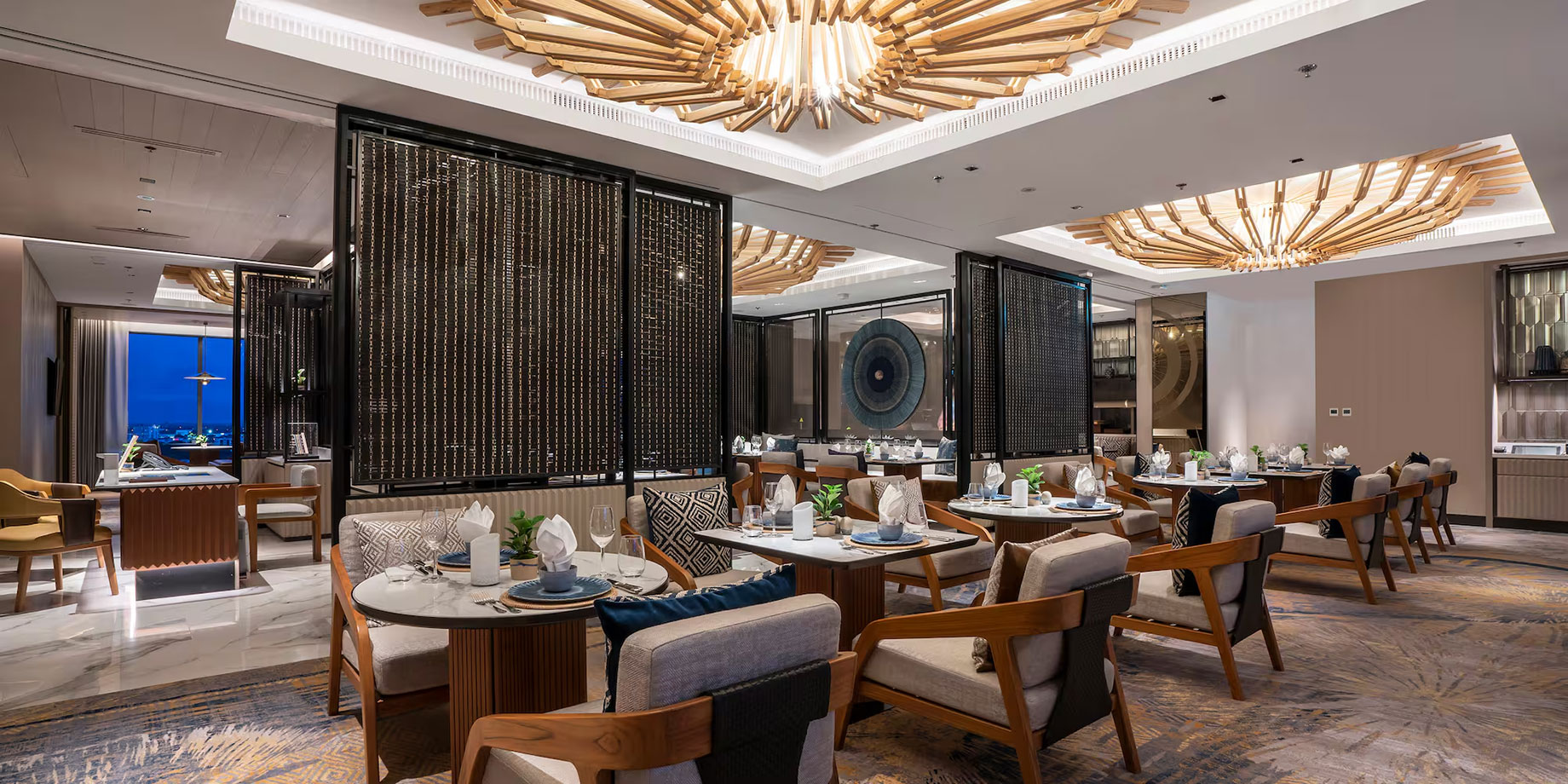
Mai Restaurant & Bar and Laan Na Kitchen have each been awarded the Chiang Mai Green Kitchen certificate for four consecutive years. It is a local certification, so it speaks for these two kitchens specifically, not for the whole hotel.
Mai Restaurant & Bar seats 43 up on the 21st floor and cooks contemporary Lanna food to order from an open kitchen, with plates starting around 170 THB (about US$5). Its Khao Soi Salad uses Tai Lue tofu and wheat and free-range egg noodles. Laan Na Kitchen, a ground-floor restaurant, starts breakfast at 6am and runs an international menu through the day. Confirm current prices before booking.
Eco Activities for Children
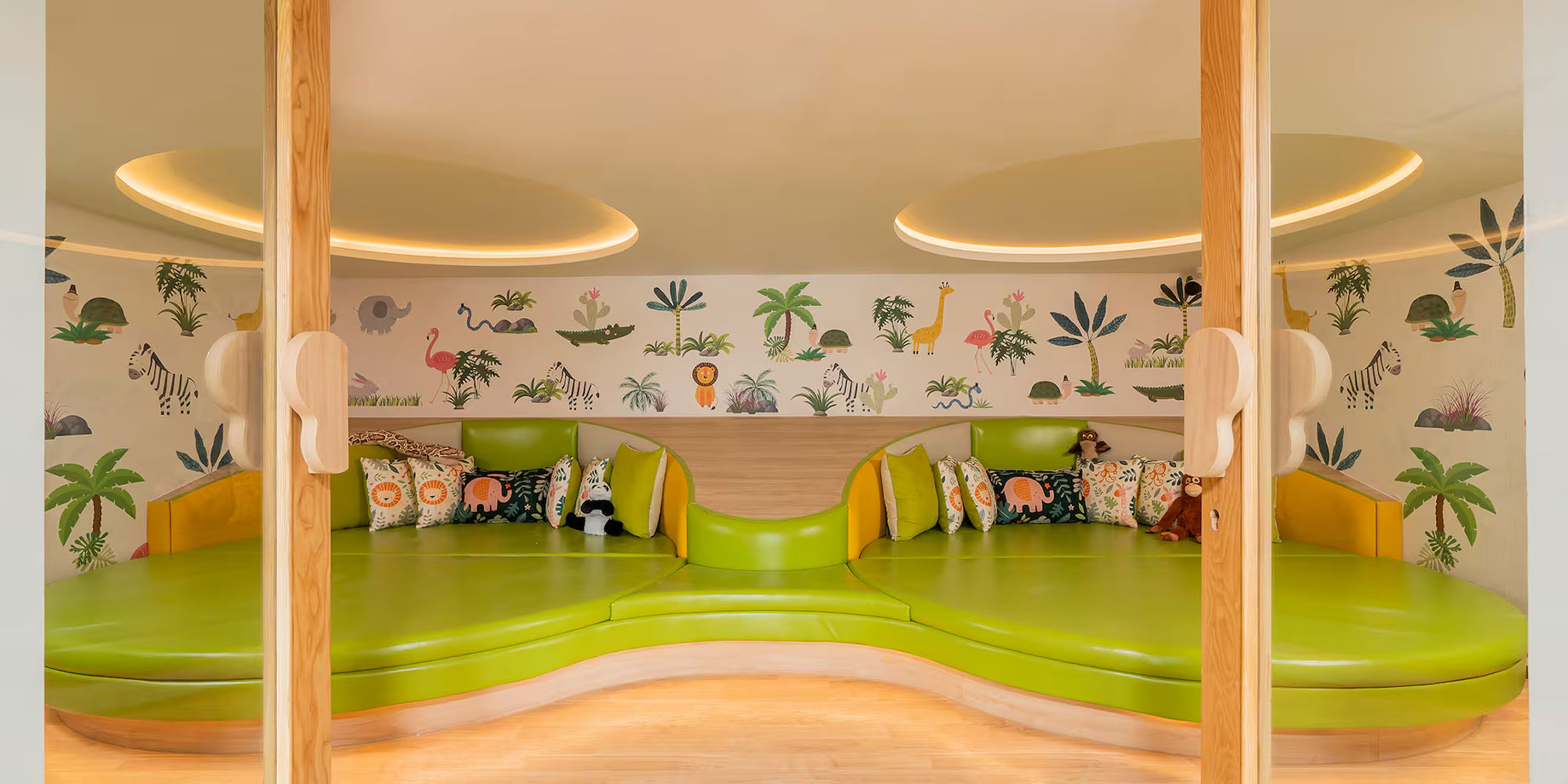
Children get a version of the programme at The Kidsdom, which welcomes ages 4 to 12 and runs Eco-Friendly Activities for Kids: screen-free morning sessions where egg cartons, milk bottles and tissue paper become crafts, pencil shavings become pictures and a recycled bottle becomes a flower vase.
The same space has game rooms and Montessori-inspired toys, so the sessions sit alongside ordinary play rather than replacing it. Ask reception which mornings the activities run before planning a day around them.
Which Certifications Does the Hotel Hold?
The hotel’s wider recognition includes Ecostars® sustainability certification and Tripadvisor’s Travellers’ Choice award. Its kitchen-level recognition includes Chiang Mai Green Kitchen certificates for Mai Restaurant & Bar and Laan Na Kitchen, each held for four consecutive years. Ecostars® assesses hotel sustainability, Travellers’ Choice reflects traveller reviews, and the Green Kitchen certificates apply to the two named restaurants rather than the hotel as a whole.
A tower in the Night Bazaar district is not a jungle lodge, and it makes a different case for itself: fewer car journeys. The Night Bazaar is at the door, Tha Phae Gate is 17 minutes away on foot and Wat Chedi Luang, in the Old City, about 26 minutes at 1.9 km. The airport is roughly 11 minutes by car, and the hotel’s airport transfer carries an extra fee, so a taxi or app car is the alternative. The forest work happens off site.
A green claim holds up when it comes with a named programme, a number and a date. The forest work has all three: Meliá Go Green, more than 6,600 trees and a start in 2022. The kitchen has the 360-degree cuisine programme, a named partner farm and a four-year run of certificates.
For travellers who want sustainability to show up at the table and on the mountain, not on a towel card, this hotel makes the case. Book a Meliá Room, take dinner at Mai Restaurant & Bar, and skip the suites: the green case lies in the kitchen and the forest, not the square metres.
Two questions to put to the hotel when booking: which partner farms supply the current menu, and whether a planting date falls during the stay. Neither is promised on a standard booking, and the answers are the best test of everything above.
For rooms and current offers, contact Meliá Chiang Mai through its reservations team at reservation.chiangmai@melia.com.