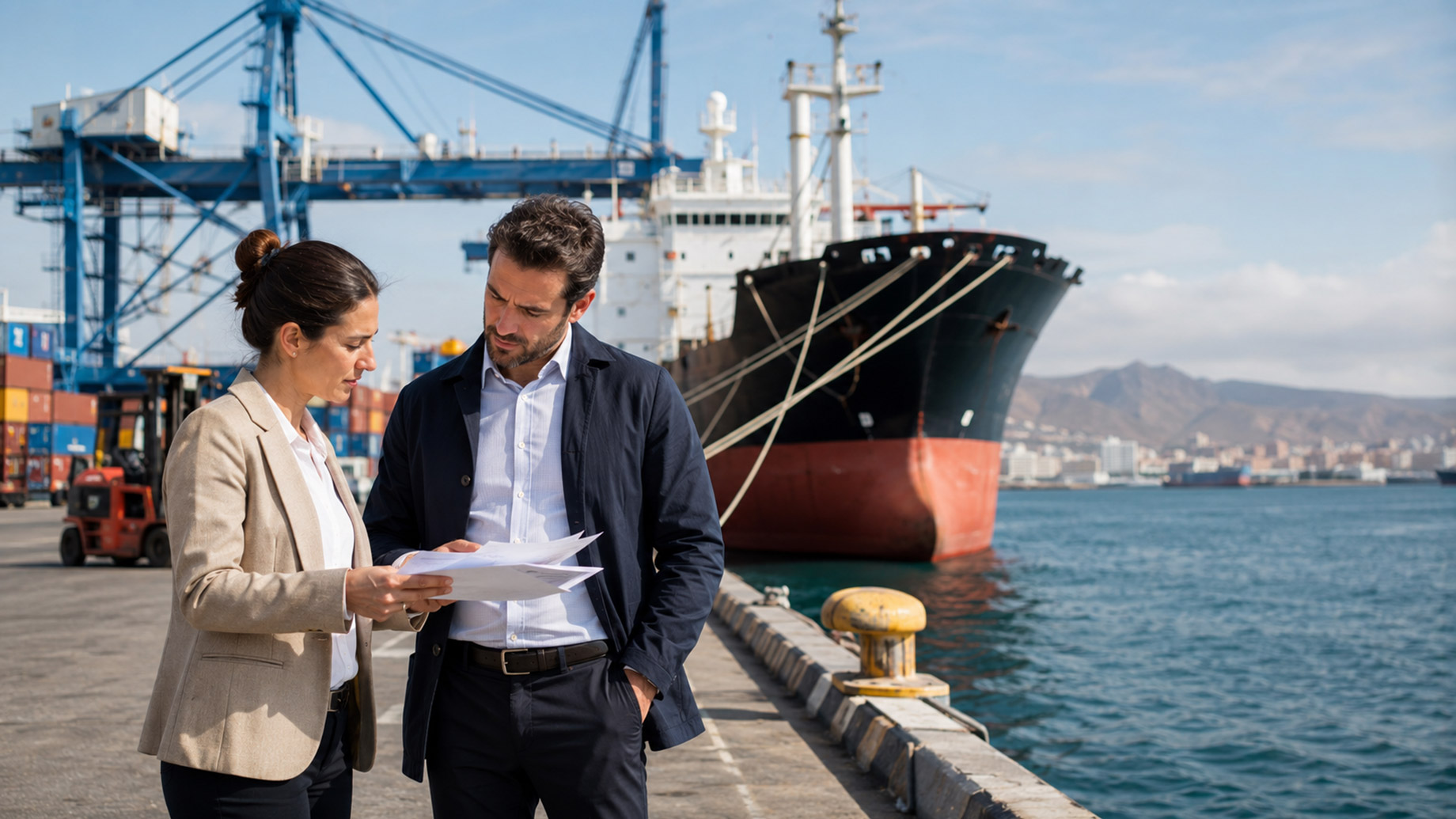
Las Palmas is one of the most practical Atlantic ports for vessels moving between Europe, West Africa, the Americas, and the wider Canary Islands. For shipowners, operators, managers, and captains, the port is often more than a simple stop. It can be a place to arrange bunkering, crew changes, stores, spare parts, repairs, inspections, customs formalities, waste disposal, or off-port-limit support.
That makes the choice of shipping agency important. A good local agent does not simply answer emails and book a berth. The right agency helps reduce delays, coordinates with the correct authorities, anticipates documentation problems, and keeps the vessel’s port call moving with as little operational friction as possible.
For vessels calling at Las Palmas, choosing the right partner should be based on experience, responsiveness, service coverage, local relationships, and the ability to manage practical details under time pressure.
Why Las Palmas Matters for Shipowners and Operators
Las Palmas has long been a strategic maritime location because of its position in the Atlantic. It serves vessels involved in cargo movement, offshore activity, cruise operations, fishing, repair work, and international transit. The port’s role is strengthened by the Canary Islands’ location between major Europe, Africa, and America routes, making it a common operational stop for vessels that need services before continuing their voyage.
For operators, this location can be useful only if the call is properly organised. A poorly coordinated stop can turn a short port call into a costly delay. Clearance issues, late supplies, unclear communication, unavailable transport, or weak coordination with authorities can all affect the vessel schedule.
This is where a competent shipping agency becomes essential.
What a Shipping Agency Does in Las Palmas
A shipping agency acts as the local operational representative for the vessel, owner, charterer, or manager. Its role can vary depending on the type of call, but in Las Palmas it often includes coordination with port authorities, customs, immigration, suppliers, terminals, surveyors, repair teams, bunker providers, transport companies, hotels, and local service contractors.
Common agency tasks may include:
- Port call coordination
- Berth, pilot, tug, and shifting arrangements
- Customs and immigration formalities
- Crew change support
- Bunkering coordination
- Spare parts clearance and delivery
- Provisions and stores
- Medical assistance
- Waste disposal and deslopping
- Repair and inspection coordination
- Cash to master
- Hotel and transport arrangements
- Off-port-limit service support
For example, Canary Port Services is one example of an experienced shipping agency in Las Palmas providing comprehensive port services for shipowners, operators, and shipping companies that need local support in Spain’s Canary Islands.
Key Qualities to Look For in a Las Palmas Shipping Agency
Not every port call has the same requirements. A bunkering stop, crew change, repair call, cargo operation, or OPL attendance will each need different levels of coordination. The best agency for one vessel may not be the best agency for another.
The following criteria are the most important.
1. Local Port Knowledge
Local experience matters. A shipping agency should understand how Las Palmas works in practice, not only in theory. That includes local procedures, port authority requirements, customs processes, supplier availability, transport timing, and the realities of working with different terminals and contractors.
The value of a local agent is often seen when something changes. A delayed arrival, missing document, late spare part, urgent crew issue, or sudden repair request requires someone who knows who to call and how to keep the process moving.
2. 24/7 Responsiveness
Shipping does not operate on office hours. A vessel may arrive at night, need emergency support on a weekend, or require last-minute changes due to weather, schedule pressure, or operational instructions from the owner.
A serious agency should offer reliable round-the-clock communication. It should also be clear who is responsible for each matter. Operators should avoid agencies that provide vague contact arrangements or slow responses during critical planning stages.
3. Full Service Coverage
A narrow-service agency may be suitable for a simple administrative call, but many vessels need more. If the ship requires bunkering, crew changes, supplies, customs clearance, spare parts, repairs, surveys, or transportation, the agent must be able to coordinate these services efficiently.
Before appointing an agency, ask whether it can manage the full scope of the call or whether it will rely heavily on third parties without clear oversight.
| Service Area | Why It Matters | Question to Ask |
|---|---|---|
| Bunkering | Delays affect voyage planning and commercial schedules | Can the agency coordinate fuel supply, surveyors, and timing? |
| Crew Changes | Immigration, transport, hotels, and tickets must align | Can the agency manage sign-on and sign-off requirements? |
| Spare Parts | Customs and delivery timing can affect repairs | How quickly can parts be cleared and delivered? |
| Repairs | Contractors must be available and suitable for the job | Can the agency coordinate afloat, deck, hull, or engine repairs? |
| Documentation | Errors can delay clearance or departure | Who checks documents before vessel arrival? |
How to Evaluate an Agency Before Appointment
The selection process should be practical. Operators do not need a long theoretical review, but they should ask direct questions before confirming an appointment.
Start with the type of vessel and the purpose of the call. A tanker, offshore vessel, yacht, cruise vessel, cargo ship, or fishing vessel may need different support. Then confirm the agency’s experience with similar operations in Las Palmas.
A reliable agency should be able to explain:
- Which documents are needed before arrival
- Expected timelines for clearance and services
- Availability of local suppliers
- How urgent requests are handled
- Who will be the operational contact
- Whether costs are estimated clearly before work begins
- How updates will be communicated during the port call
Clarity at the beginning usually prevents problems later.
Cost Should Not Be the Only Factor
Agency fees matter, but the cheapest agency is not always the best choice. A small saving can be lost quickly if poor coordination causes delays, missed connections, late delivery of spare parts, or extended port stay costs.
Operators should look at total operational value. This includes response speed, accuracy, local knowledge, service reliability, and the ability to prevent avoidable delays.
In port operations, a good agency often saves money by preventing problems rather than by quoting the lowest fee.
Warning Signs to Avoid
There are several signs that a shipping agency may not be the right fit for a vessel call in Las Palmas.
Be cautious if the agency is slow to respond before appointment, cannot clearly explain required documents, avoids giving operational details, provides unclear cost estimates, or cannot confirm whether services are handled directly or through third parties.
Poor communication before arrival is usually a warning sign. If the agency is disorganised during the planning stage, it is unlikely to perform better once the vessel is alongside or under time pressure.
Final Thoughts
Choosing the right shipping agency in Las Palmas is a practical operational decision. The port’s Atlantic location makes it valuable for many types of vessels, but the success of a call depends heavily on local coordination.
Shipowners and operators should look for an agency with strong port knowledge, reliable 24/7 communication, broad service coverage, transparent coordination, and the ability to handle unexpected changes. The right local partner can help reduce delays, simplify formalities, and make the vessel’s stay in Las Palmas more efficient from arrival to departure.