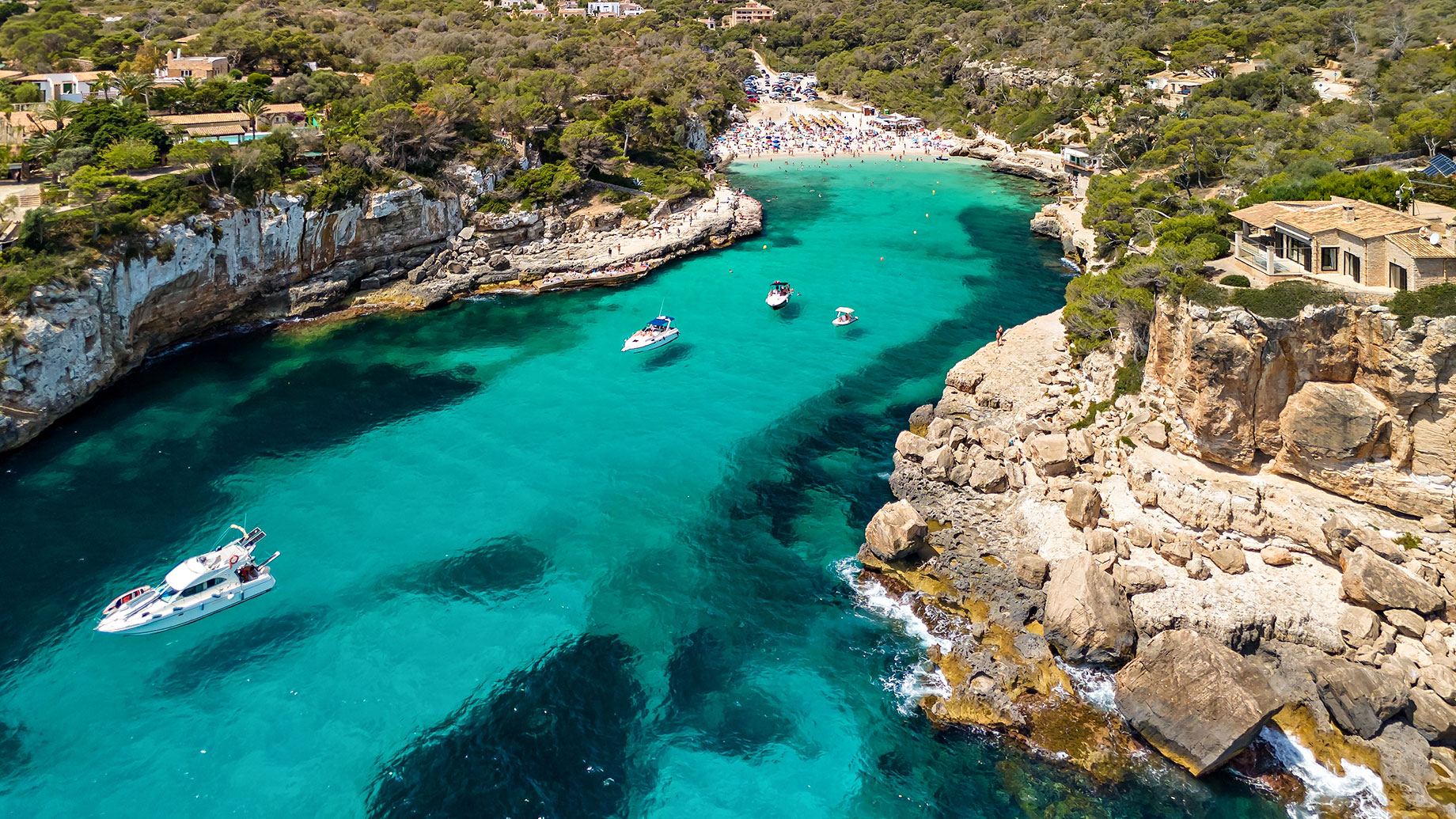
Mallorca, the largest of Spain’s Balearic Islands, stretches across the shimmering Mediterranean Sea with a captivating blend of rugged mountains, pristine beaches, and centuries-old villages. Far beyond its reputation as merely a beach destination, the island reveals layers of history, culture, and natural beauty that reward those who venture beyond the resorts. Whether you’re drawn to medieval towns perched in mountain valleys, ancient ruins that whisper of civilizations past, or coastal coves where turquoise water laps against golden sand, Mallorca offers experiences that linger long after you’ve returned home.
Getting to Mallorca
Reaching this Mediterranean paradise proves remarkably straightforward. Palma de Mallorca Airport welcomes flights from across Europe, with budget carriers like Ryanair, EasyJet, and Wizz Air offering affordable connections from major cities. Travellers from North America can now fly direct from Newark to Palma with United Airlines, while those coming from elsewhere typically connect through Barcelona, Madrid, or other European hubs in the EU. The airport sits just 8 kilometres from Palma’s city centre, making onward travel convenient whether you’re heading to the capital or the island’s smaller towns.
Once you arrive, renting a car opens up Mallorca’s full potential, allowing you to wind through mountain roads, discover hidden beaches, and move freely between villages at your own pace. The island’s road network connects all major destinations efficiently, though the mountain passes of the Serra de Tramuntana demand careful navigation. A great and affordable way to explore the island is by joining a guided tour such as the ones offered by Mallorca Premium Tours — we tried one ourselves and were delighted with both the experience and the guide’s friendliness.
Valldemossa
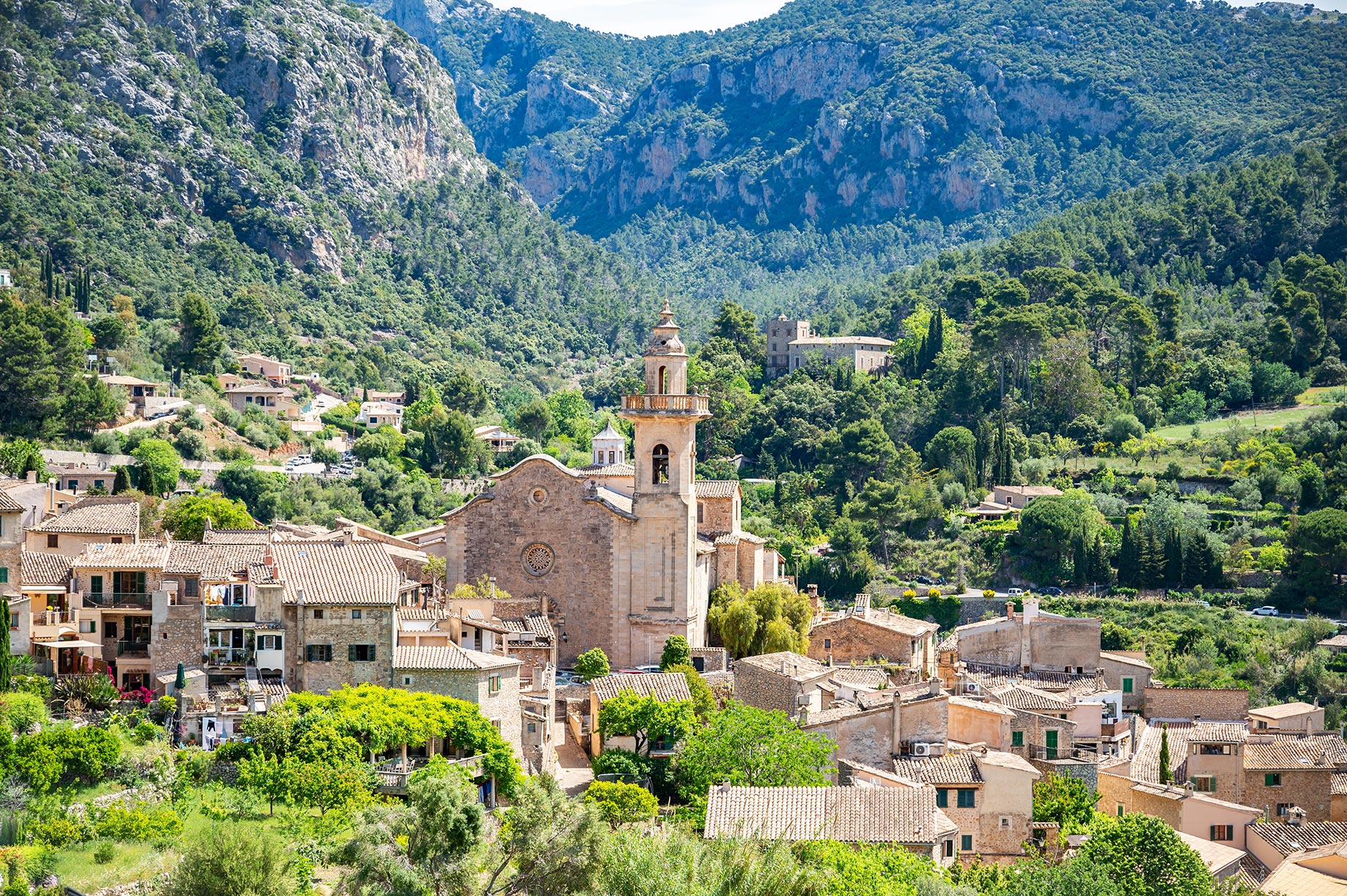
The mountain village of Valldemossa rises like a vision from the Serra de Tramuntana’s green slopes, its honey-coloured stone houses climbing toward the sky. Narrow cobblestone streets wind between facades adorned with vibrant flower pots, while doorways display ceramic tiles honouring Santa Catalina Thomàs, Mallorca’s beloved saint. The village earned international fame when composer Frédéric Chopin and writer George Sand spent the winter of 1838-1839 here, seeking respite in the mountain air.
The Royal Carthusian Monastery dominates Valldemossa’s skyline, its church tower visible from miles away. Originally built as a royal palace in the 14th century, it later housed Carthusian monks before Chopin and Sand rented modest cells during their controversial stay. Today, visitors can explore the monastery’s cloisters, view Chopin’s piano, and wander through serene gardens where centuries of contemplation have left their mark. Beyond the monastery, Valldemossa’s charm lies in simply wandering its atmospheric streets, perhaps stopping at a café to sample coca de patata, a sweet local pastry dusted with powdered sugar.
Sóller and Port de Sóller
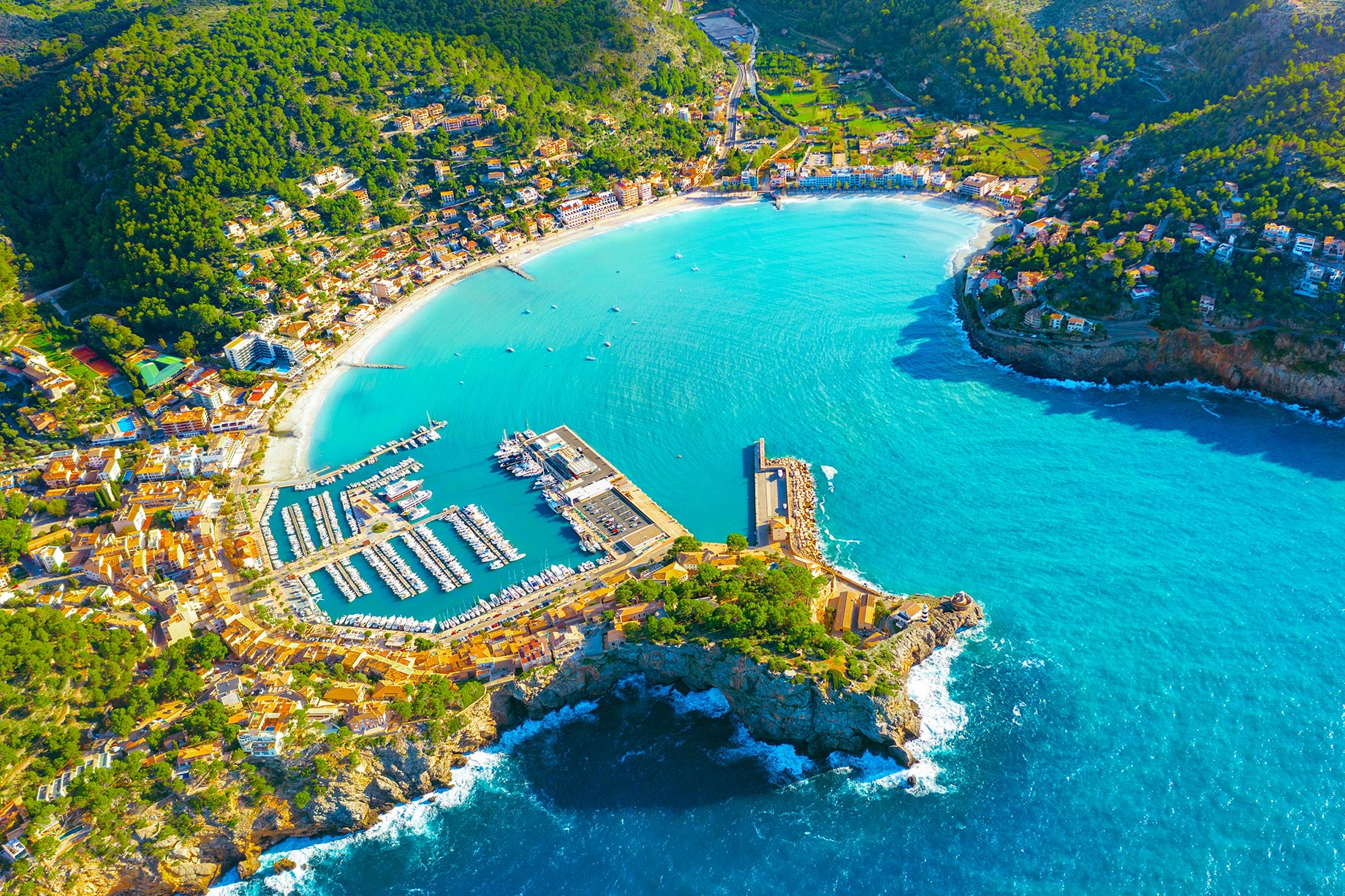
Nestled in a fertile valley surrounded by orange groves and olive trees, Sóller maintains an authentic Mallorcan character despite its popularity with visitors. The town’s main square bustles with life beneath the imposing baroque facade of Sant Bartomeu church, while modernist architecture from the early 20th century adds unexpected elegance to the streets. Prosperous merchants returning from France brought Art Nouveau influences that still define Sóller’s distinctive appearance.
The vintage wooden train from Palma to Sóller, inaugurated in 1912, offers one of the island’s most enchanting journeys. The narrow-gauge railway climbs through 13 tunnels and crosses mountain viaducts, revealing breathtaking vistas of the Tramuntana peaks before descending into Sóller’s valley. From Sóller, an equally charming tram rattles 5 kilometres down to Port de Sóller, where a horseshoe bay shelters sandy beaches and a waterfront promenade lined with seafood restaurants. The port’s protected waters make it ideal for swimming, while boat excursions depart regularly for dramatic coastal spots like Sa Calobra.
Deià
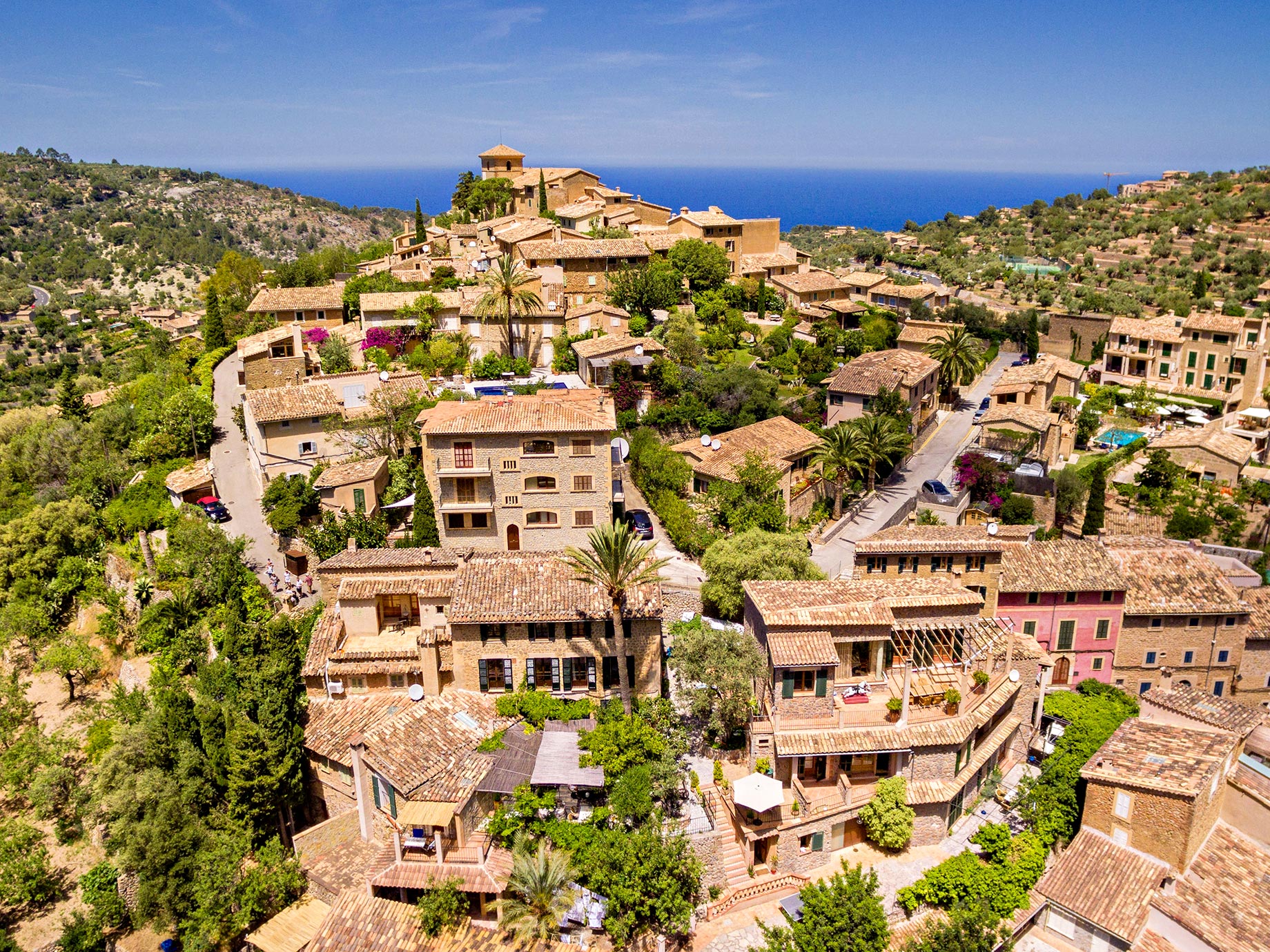
Artists and writers have long gravitated toward Deià, drawn by its extraordinary beauty and creative atmosphere. Stone houses cascade down a hillside overlooking the Mediterranean, their rustic walls softened by climbing roses and jasmine. The village achieved fame as the longtime home of English poet Robert Graves, whose presence attracted an international community of artists that continues today.
Deià rewards those who explore beyond its central streets. A winding path leads down to Cala Deià, a small rocky cove where locals and visitors swim in crystalline water framed by cliffs. The walk takes about 20 minutes each way, descending through olive groves and Mediterranean scrubland. Back in the village, cafés and galleries invite lingering, while the church’s bell tower marks time as it has for centuries. Though small, Deià possesses an ineffable quality that captures hearts.
Palma
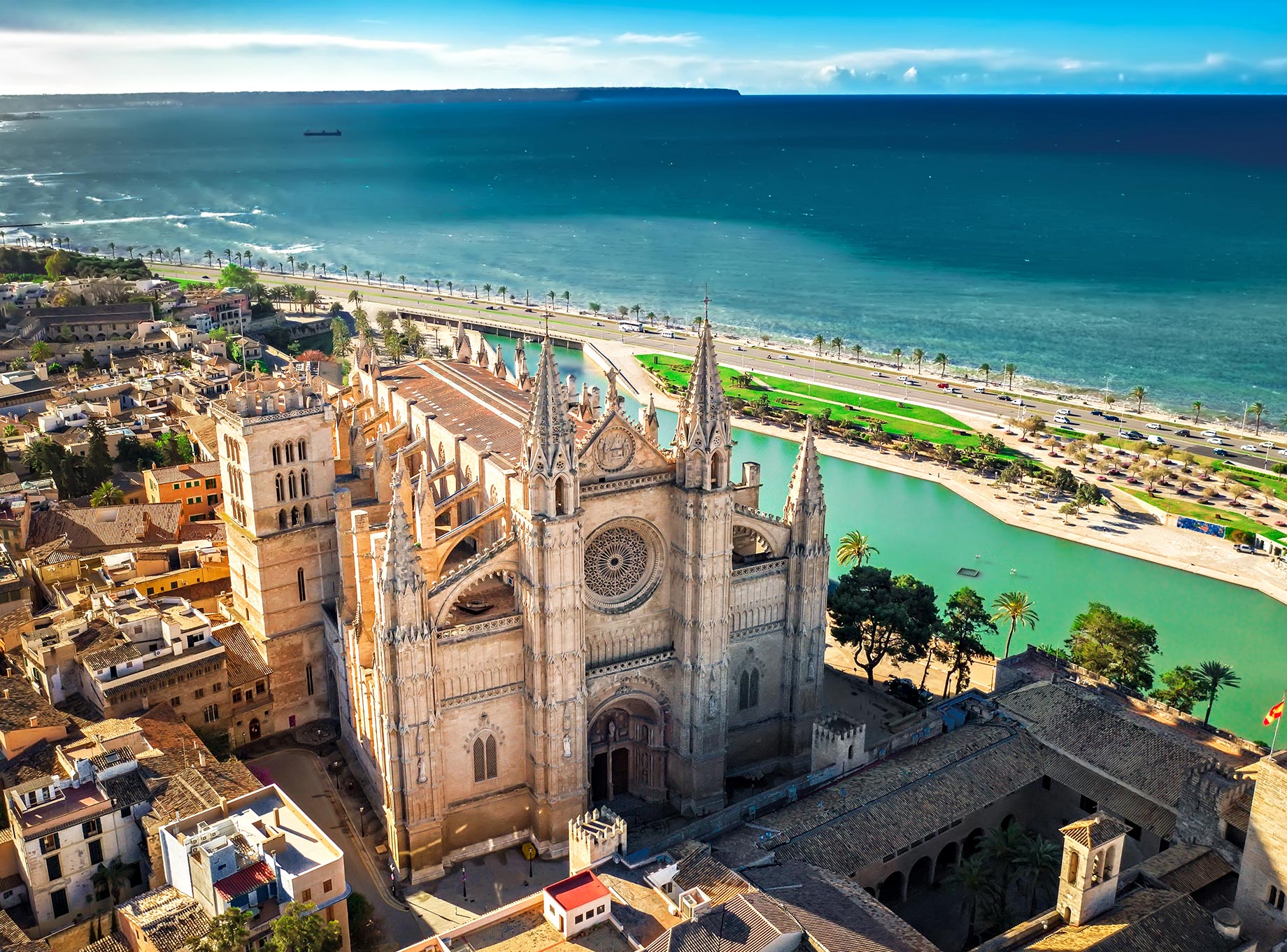
Palma de Mallorca pulses with urban energy while honouring its layered past. The Gothic cathedral La Seu rises majestically above the seafront, its flying buttresses and soaring nave creating one of the Mediterranean’s most impressive sacred spaces. Nearby, the Almudaina Palace—originally a Moorish fortress—serves as an official royal residence, its austere walls concealing elegant courtyards.
Palma’s old town unfolds as a labyrinth of narrow streets where boutiques, galleries, and tapas bars occupy centuries-old buildings. The Santa Catalina neighborhood has emerged as a culinary hotspot, its streets filled with innovative restaurants and traditional markets. Along the waterfront, the Paseo Marítimo stretches for miles, lined with palm trees and offering views across the bay. Modern Palma embraces contemporary culture through museums like Es Baluard, which showcases Mediterranean art, while maintaining deep connections to its Moorish, Jewish, and Christian heritage.
Artà
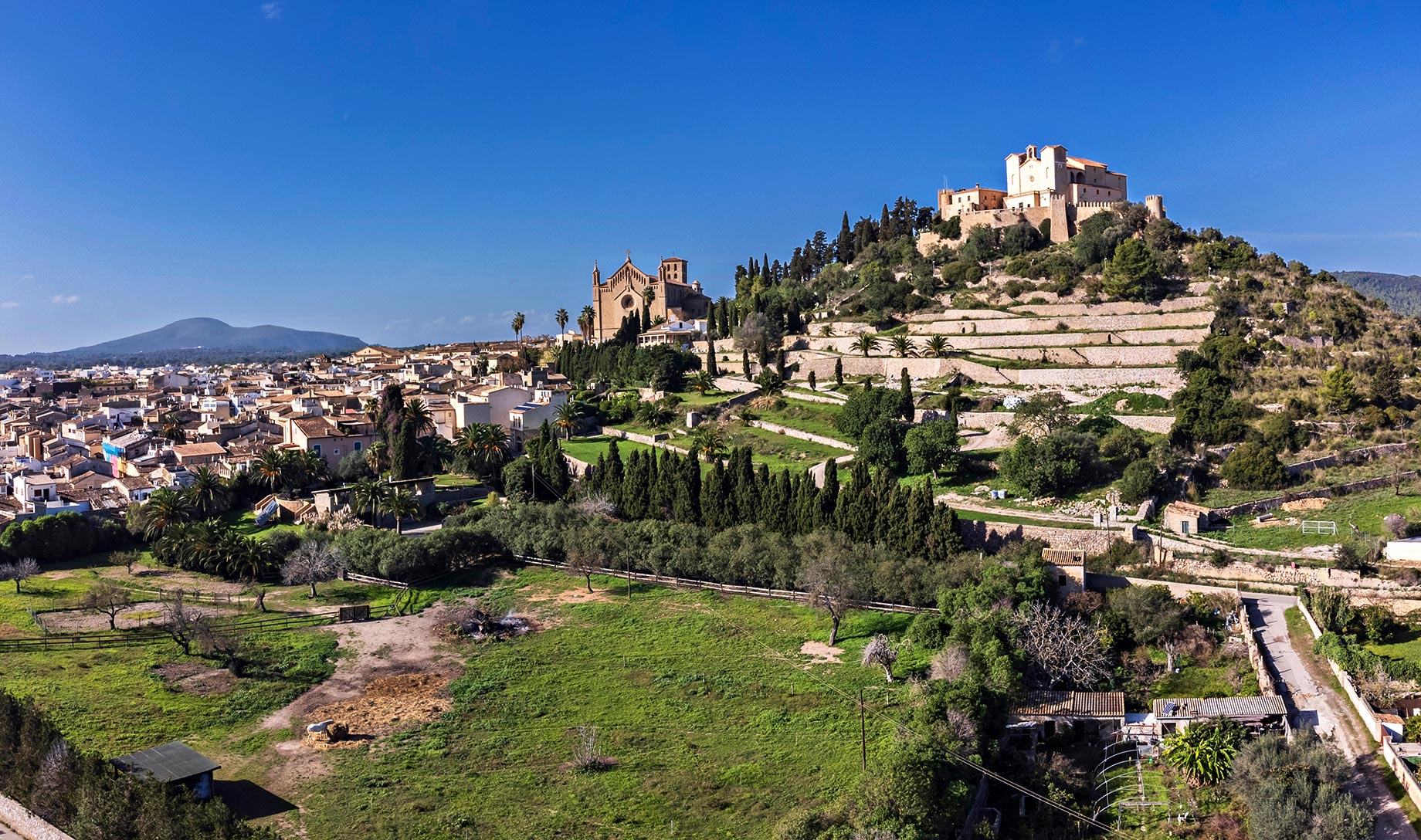
In Mallorca’s northeast corner, Artà remains wonderfully removed from mass tourism. The Santuari de Sant Salvador crowns a hill above the town, reached by climbing a stone stairway past cypress trees. From this elevated sanctuary, views extend across terracotta rooftops to the distant Mediterranean. Below, Artà’s streets retain an authentic rhythm, particularly on Tuesday mornings when the weekly market fills the main square with local produce, flowers, and handicrafts.
The spectacular Coves d’Artà tunnel into cliffs above Canyamel Bay, their cathedral-like chambers adorned with massive stalactites and stalagmites. The “Queen of Columns” stalagmite rises 22 meters toward the cavern roof, while theatrical lighting enhances the dramatic formations. These caves once sheltered Arab citizens during the Christian conquest and later inspired Jules Verne’s imagination. Near Artà, the Talayotic settlement of Ses Païsses preserves Bronze Age ruins that speak to the island’s ancient inhabitants.
Alcúdia
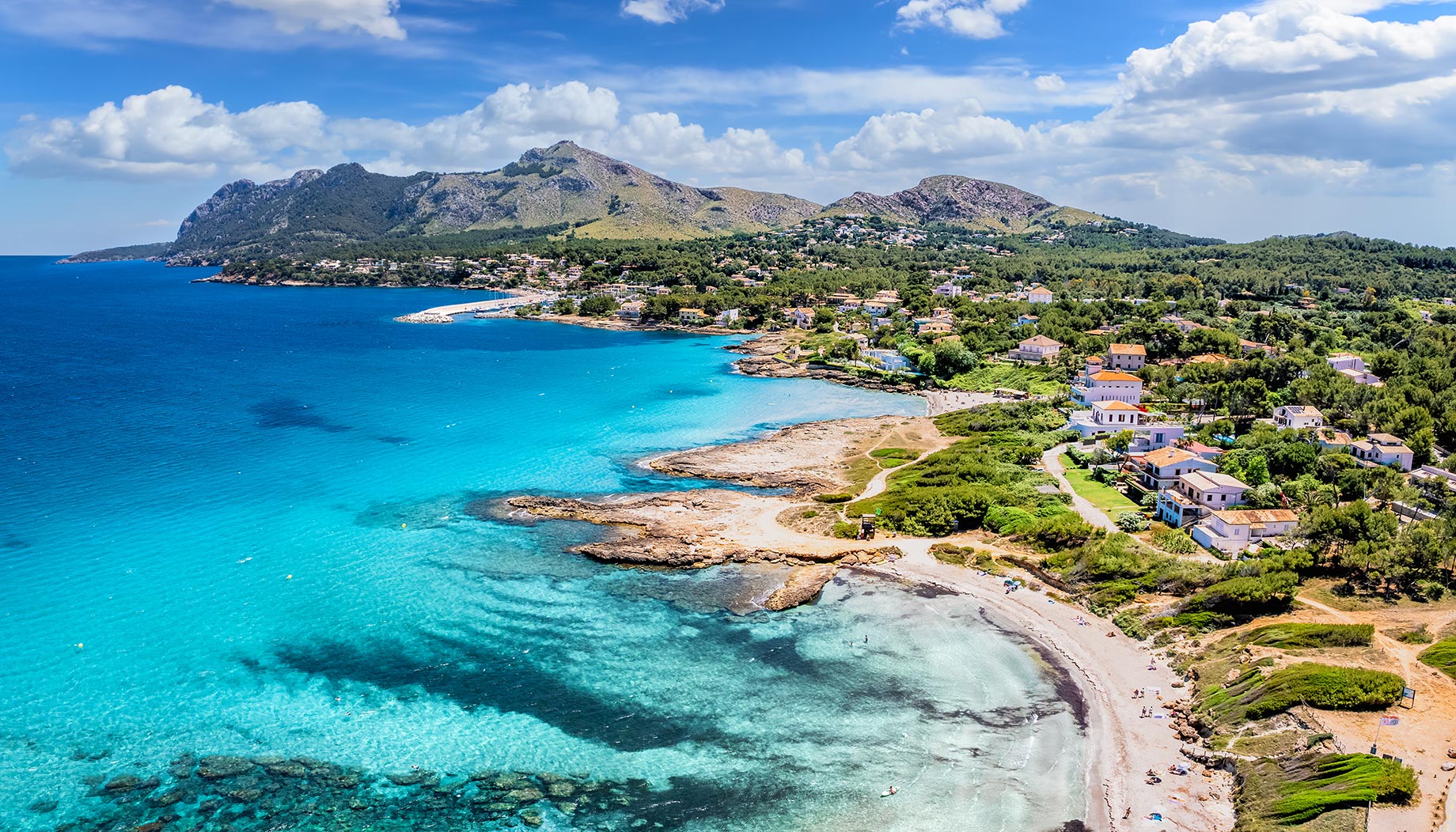
Alcúdia stands as Mallorca’s oldest continuously inhabited town, its medieval walls encircling a beautifully preserved old quarter. Two imposing gates—Porta de Mallorca and Porta del Moll—pierce the 14th-century fortifications, inviting visitors into narrow streets where history feels immediate. Walking atop the walls provides panoramic views across the town and surrounding countryside, while the Tuesday and Sunday markets transform the streets into a vibrant showcase of local life.
Just outside the old town, the Roman ruins of Pollentia reveal foundations and an amphitheater from when this was Mallorca’s most important Roman settlement. The site spreads across several hectares, offering glimpses into daily life two millennia ago. Modern Alcúdia extends to Port d’Alcúdia, where a 7-kilometre stretch of sandy beach curves along the bay. The shallow, calm waters prove perfect for families, while the port area offers water sports, restaurants, and boat trips to hidden coves along the rugged northern coast.
Mallorca rewards those who approach it with curiosity rather than expectations. Each village possesses distinct character, each beach reveals different beauty, and the island’s compact size makes it possible to experience mountains and Mediterranean, history and modernity, solitude and society all within the same day. The memories you create here—whether watching sunset paint Deià’s stones golden, swimming in a secluded cove, or simply savouring fresh seafood while waves lap nearby—become the stories you’ll tell for years to come.